
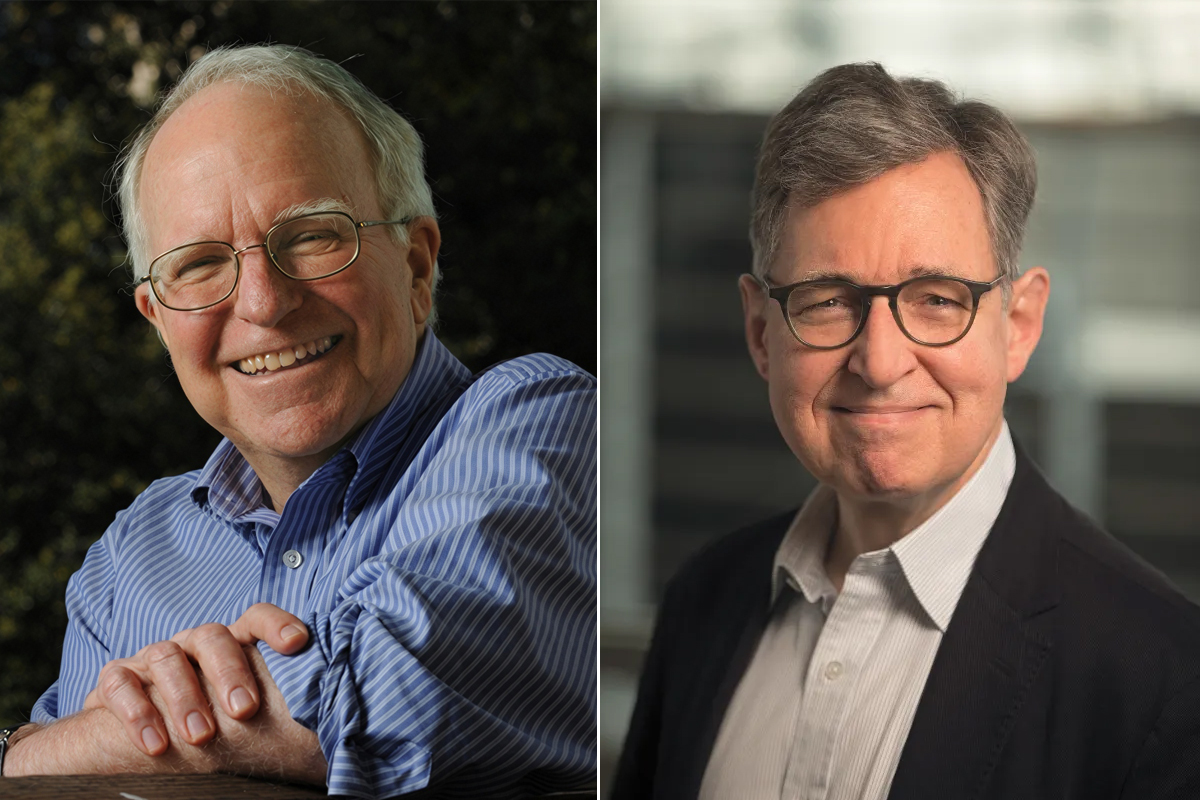
American economists Robert E. Hall of Stanford University and Michael Woodford of Columbia University have been awarded the 2026 Sveriges Riksbank Prize in Economic Sciences in Memory of Alfred Nobel, according to an announcement from the Royal Swedish Academy of Sciences in Stockholm. Worth approximately $1.2 million, the prize recognizes the pair for establishing the microeconomic foundations of macroeconomic stabilization, reshaping how global institutions navigate economic fluctuations and crises[3].
The selection arrives at a critical juncture for international policymakers, who continue to grapple with persistent inflation risks, volatile government bond yields, and shifting global growth trajectories. By moving away from purely statistical correlations between broad aggregates like inflation and output, Hall and Woodford engineered models that explain how real-world decisions by individual actors drive business cycles.
Rewriting the Rules of Stabilization Policy
As the Royal Swedish Academy of Sciences detailed in its official scientific background, traditional Keynesian models experienced severe setbacks during the stagflation shocks of the 1970s. While mid-century intervention strategies successfully countered downturns through deficit spending and interest rate adjustments, those legacy models failed when high inflation accompanied high unemployment[5].
Hall and Woodford responded by reconstructing the theoretical architecture of macroeconomics. In a seminal 1978 article cited by the Nobel Committee, Hall demonstrated how consumer spending patterns track consumption smoothing, showing that households make forward-looking choices rather than merely reacting to immediate income. Building upon this, Woodford integrated comprehensive forward-looking pricing behavior by firms into his influential 2003 book, Interest and Prices: Foundations of a Theory of Monetary Policy.
Together, their contributions forged the modern New Keynesian models utilized today by central banks and finance ministries across the globe. These frameworks allow policymakers to quantify how policy rate adjustments and fiscal levers transmit through the economy to smooth out peaks and troughs[8].
A Paradigm Shift for Central Banks
The practical application of their research is visible in modern monetary policy operations. Central banks routinely evaluate how forward guidance and interest rate adjustments alter expectations among consumers and enterprises. As the Nobel Committee noted, the laureates provided a stable theoretical framework enabling well-timed monetary and fiscal interventions that dampen damaging economic shocks.
The National Bureau of Economic Research noted that both laureates are long-standing research affiliates whose academic lineages trace back to the Massachusetts Institute of Technology, where Hall earned his doctorate in 1967 and Woodford in 1983. Hall also served as the founding director of the NBER Economic Fluctuations and Growth program and chaired the Business Cycle Dating Committee for over thirty years[9].
Evaluating the Impact and Limitations
Despite their widespread adoption, New Keynesian models face ongoing academic scrutiny. Critics and financial market practitioners frequently question how accurately these complex mathematical structures capture sudden structural breaks, financial market panics, or supply-side shocks such as energy constraints and geopolitical conflicts. While Hall and Woodford successfully integrated micro-foundations into macro policy, real-world execution remains vulnerable to data lags and shifting consumer sentiment.
Robert E. Hall and Michael Woodford are awarded this year's prize in economic sciences for demonstrating how economic models could be reconstructed to revitalise stabilisation policy.
The Royal Swedish Academy of Sciences
Reacting to the announcement from Stanford, Hall remarked on the collaborative nature of his academic journey. Stanford Report quoted him stating, "I've spent my career trying to understand how the economy works, following interesting questions wherever they led. When I thought I had a new idea, the next step was to find out whether it was actually new, whether it was right, and whether it mattered."
Video
Nobel Economics Prize 2026: Robert Hall, Michael Woodford Wins Prize For Economic Stabilisation →