
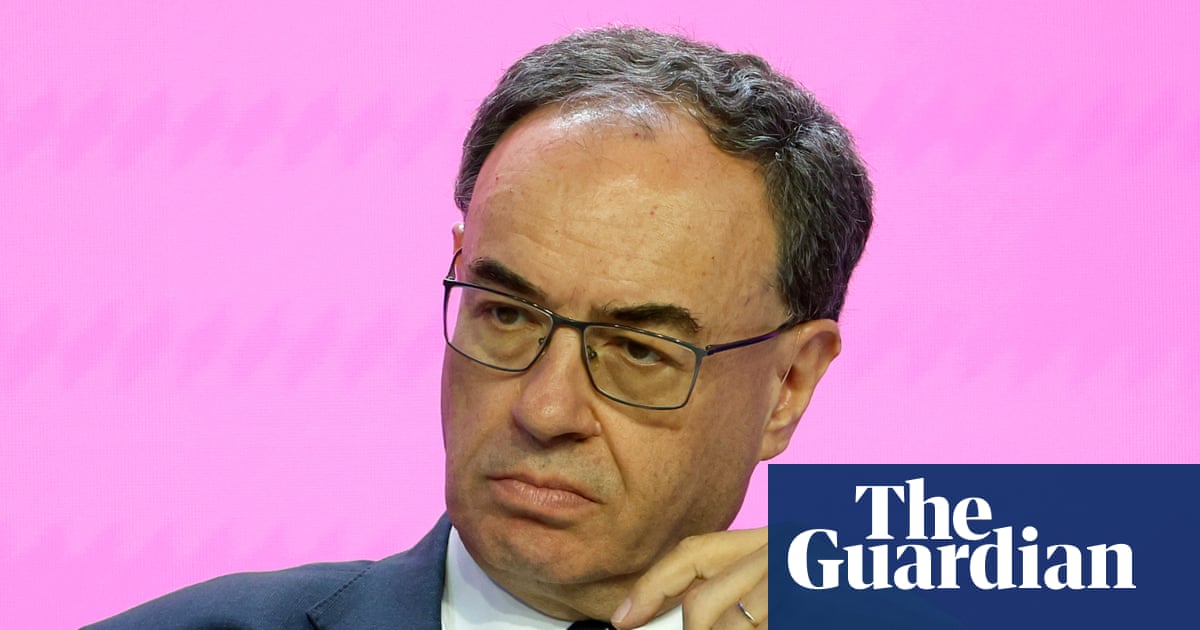
Bank of England Governor Andrew Bailey joined a sweeping walkout of European finance leaders during an International Monetary Fund steering committee session in Bangkok, leaving the hall the moment Russian Finance Minister Anton Siluanov began addressing the delegates. The coordinated departure, confirmed by the Bank of England, underscored persistent geopolitical fault lines within global financial governance more than four years after Moscow launched its full-scale invasion of Ukraine[1] [4].
The incident unfolded during the annual gathering of the International Monetary and Financial Committee (IMFC), the principal policy-steering body of the IMF, which brought roughly 18,000 delegates to the Thai capital. When Siluanov took the floor to speak in Russian, Bailey stood and exited alongside central bankers and finance ministers representing France, Germany, Scandinavia, and the Baltic states. The exit served as an unmistakable signal that European economic authorities refuse to treat Moscow as a standard partner in international economic forums.
A Unified European Stance in the Room
The scale of the protest went well beyond individual posturing. Speaking at an event on the sidelines of the summit, German Bundesbank President Joachim Nagel estimated that roughly half of all delegates in the room participated in the exit. Nagel praised the maneuver as a vital moral stand, remarking that the action demonstrated strong solidarity and shared democratic values against unprovoked aggression[7].
European diplomats present at the summit reiterated that the war remains an existential threat to European stability. Reuters quoted one European diplomat directly framing the demonstration as a boundary line against normalization:
The Ukraine war is existential for us in Europe. We cannot normalise relations with Russia.
European diplomat, speaking to Reuters
Delegations that vacated their seats included representatives from Denmark, Sweden, Finland, Norway, Lithuania, Latvia, and Estonia. However, participation across European institutions was not entirely uniform. Two people familiar with the session told Reuters that European Central Bank President Christine Lagarde remained in the room while Siluanov spoke, showcasing nuanced divisions in tactical approach even among top European officials[5].
Transatlantic Discord and the Washington Divide
The walkout highlighted deepening philosophical divisions between European capitals and Washington regarding engagement with Moscow. Only days earlier, Germany had warned publicly against rehabilitating Russia on the global stage following Siluanov's appearance at a G20 finance gathering. Washington, which hosted Siluanov in person earlier in the year at a G20 meeting in Asheville, North Carolina, has maintained that keeping diplomatic channels open inside multilateral institutions remains essential.
United States Treasury Undersecretary Erin Browne defended that position to Reuters, stating that dialogue remains indispensable to resolving crises and that conflict resolution cannot happen if parties refuse to communicate. That posture has caused friction with Kyiv and its closest European allies. Ukrainian President Volodymyr Zelenskyy had voiced sharp criticism at a European Union summit just days prior, warning against softening pressure on the Kremlin[4].
| Delegation / Official | Action Taken During Siluanov Address | Strategic Policy Position |
|---|---|---|
| Andrew Bailey (Bank of England) | Walked out | Rejects normalization ahead of UK G20 host year |
| Joachim Nagel (Bundesbank) | Walked out | Warns against reintegrating Russia into global economic bodies |
| Nordic and Baltic Delegations | Walked out | Views Russian aggression as direct, existential regional threat[4] |
| Christine Lagarde (ECB) | Remained in session | Maintains institutional observer seat at IMF steering table |
| United States Treasury | Remained in session | Advocates open communication channels to resolve global crises[4] |
Multilateral Governance Under Strain
The walkout is the latest disruption to an international financial framework struggling to maintain consensus. Ever since Russian tanks crossed the Ukrainian border in February 2022, the IMFC has repeatedly failed to reach unanimous joint communiqués, often relying instead on summary statements released by the committee chair.
Saudi Finance Minister Mohammed Al-Jadaan, who served as IMFC chair in Bangkok, downplayed the procedural fracture. Addressing reporters at the summit's concluding press conference, Al-Jadaan emphasized that delegates ultimately agreed on the text of the chair statement, arguing that institutional compromise on critical economic topics had been preserved despite the theatrical dissent. Al-Jadaan noted that while the global economy continues to demonstrate remarkable resilience against energy shocks, conflicts, and public debt burdens, finance ministers face zero room for complacency.[7]

The Road to Britain's G20 Presidency
For Bailey and the British delegation, the Bangkok protest carries immediate diplomatic consequences. The United Kingdom is slated to host the Group of 20 summit meetings next year, placing London in the delicate position of managing a forum in which Russia holds full membership.
Navigating that presidency will test the Bank of England and HM Treasury. As host, London will face the difficult task of setting working agendas on international debt distress, financial market regulation, and monetary coordination while keeping European allies united and managing disparate stances from Washington and non-aligned emerging economies. Bailey's participation in Bangkok establishes clearly that the Bank of England intends to align tightly with its continental counterparts on Russian isolation, even as the mechanics of global economic diplomacy become increasingly fraught.