
The global digital asset sector faced an unprecedented shock late Thursday when attackers drained an estimated $6.3 billion from Binance, the world's largest cryptocurrency exchange by trading volume. The breach, which unfolded primarily across a frantic twenty-minute window, represents the largest single cyber heist in history, eclipsing all previous crypto exploits and conventional bank robberies combined[3].
The brazen intrusion prompted emergency interventions from law enforcement agencies, including the Federal Bureau of Investigation, as stablecoin issuers and security researchers raced across international time zones to freeze stolen assets. Binance immediately paused withdrawals, pledging to cover all client balances through its emergency reserves. Yet the sheer scale of the theft has shaken confidence across digital financial markets, triggering sharp price declines in major cryptocurrencies and reviving hard questions about security governance at centralized trading venues.
The Anatomy of an Unprecedented Breach
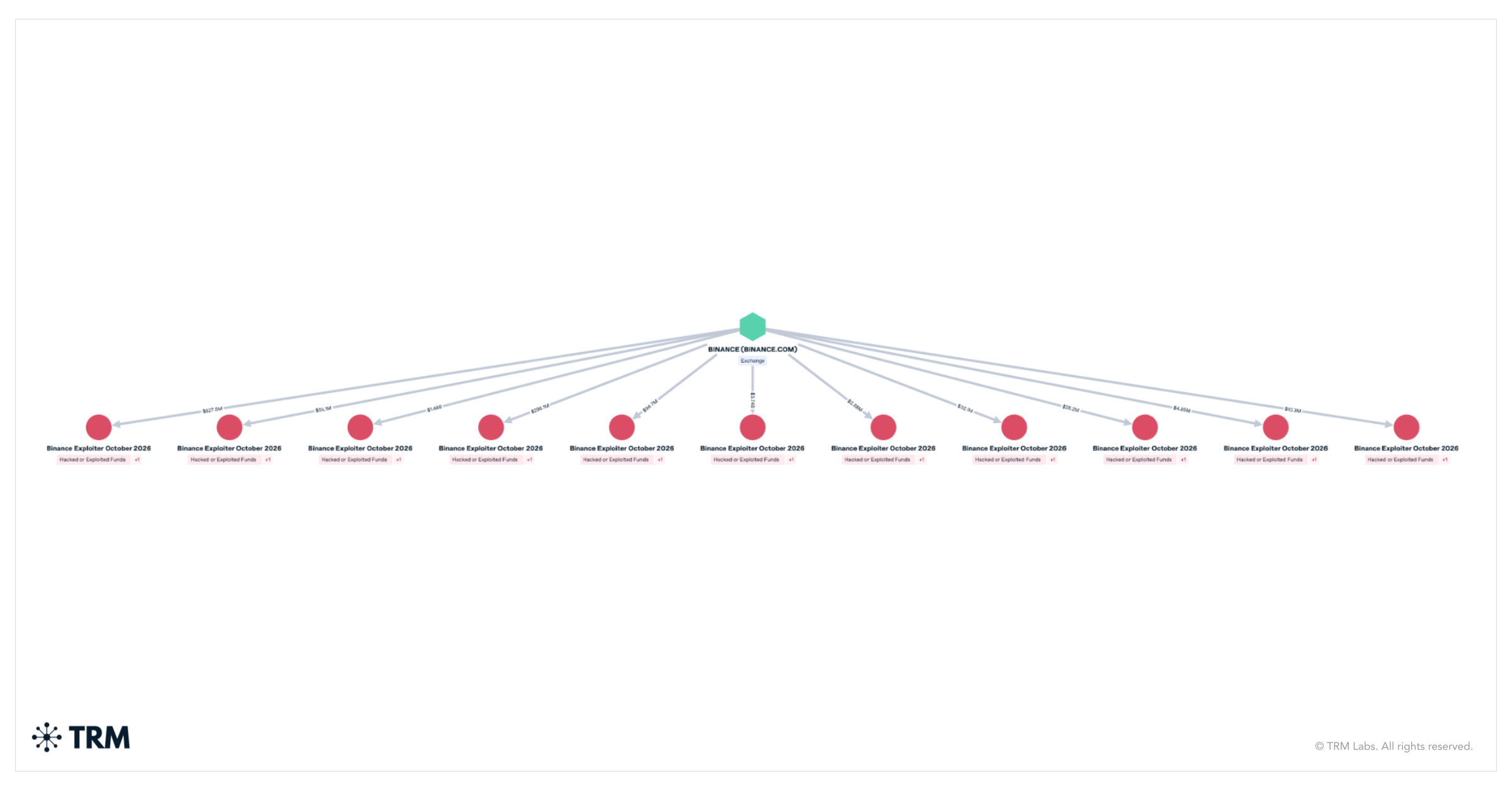
According to research published by blockchain analytics firm TRM Labs, the assault began around 20:05 UTC on October 29, when unauthorized outflows started hitting Binance hot wallets across ten distinct blockchains, including Bitcoin, Ethereum, Solana, TRON, and Base. Unlike traditional crypto thefts that rely on leaked private keys, the attackers infiltrated Binance's operational execution infrastructure. In an interview with the Financial Times, Elliptic co-founder Tom Robinson noted that the attackers effectively co-opted the exchange's internal architecture, allowing them to route withdrawal commands directly through authentic transaction-signing systems[1].
Binance initially stated that the entry point appeared to stem from a compromised laptop belonging to a development and operations engineer, which granted the intruder access to an internal service container. However, Binance chief executive Richard Teng later clarified on social media that the attack was far more sophisticated than a single credential leak. Teng emphasized that the intrusion was not a simple one-click action by one employee, noting that investigators have identified multiple points of breach across the company's internal network.
There should be controls around how withdrawals are initiated, the addresses they're allowed to send them to, controls around how those are approved... all of that failed.
Alistair Heggie, chief executive of DA Insured, to the Financial Times
On Ethereum alone, investigators found that the attackers weaponized an EIP-7702 account delegation mechanism, preparing fifty pre-signed authorizations in advance to turn a company wallet into an automated sweeper. A second wave of withdrawals struck three hours later, targeting assets on Polygon and Avalanche before internal defenses fully halted execution flows.
Intelligence Agencies Point to Pyongyang
Independent security analysts moved quickly to track the illicit flows, pointing fingers at state-sponsored actors. TRM Labs stated with high confidence that the assault was orchestrated by TraderTraitor, an elite hacking collective operating under North Korea's military intelligence apparatus, commonly associated with the Lazarus Group. Fellow analytics provider Chainalysis reached the same conclusion, citing technical tradecraft and transaction signatures identical to prior North Korean state raids[10].
Those past operations include the February 2025 theft of roughly $1.5 billion from Dubai-based exchange Bybit, which the FBI formally tied to Pyongyang. As Reuters reported, investigators from both the FBI and the United States Secret Service have joined the active investigation, coordinating directly with Binance's incident response team. Ari Redbord, global head of policy at TRM Labs, described the attack in remarks to Al Jazeera as a watershed moment for international security, noting that massive digital currency thefts by North Korea are routinely channeled into funding its illicit weapons and ballistic missile programs.
In response to the incident, global market participants initiated an emergency containment effort to stem the flow of funds:
- Coordinated Stablecoin Freezes: Centralized issuers including Tether and Circle swiftly blacklisted recipient addresses, freezing approximately $2.7 billion to $3 billion in stablecoins before they could be liquidated.
- Decentralized Governance Actions: The Arbitrum network's Security Council intervened on-chain to freeze thousands of Ether tokens and tens of millions of network governance tokens.
- Attacker Laundering Countermeasures: To evade freezes, the hacker rapidly swapped hundreds of millions in stablecoins into native Ether on automated lending protocols such as Aave, moving more than 18,270 Bitcoin and 420,000 Ether into self-custodial wallets beyond the administrative control of any central issuer[4].
Financial Contagion and the Balance Sheet Defense
To prevent a disorderly run on customer deposits, Binance leadership moved aggressively to project financial strength. The exchange announced that all user balances are entirely safe and that losses will be absorbed in full using the company's internal reserves alongside its emergency Secure Asset Fund for Users (SAFU). Binance co-founder Yi He confirmed that customer deposits remained technically unaffected and indicated that standard withdrawal services would resume within 48 hours following security audits.
The table below summarizes the scope of the theft and the verified financial status of the assets involved:
| Metric | Reported Value | Primary Source |
|---|---|---|
| Gross Value of Stolen Assets | $6.3 Billion to $6.36 Billion | Binance / TRM Labs[8] |
| Assets Frozen on Blockchain | Approximately $3.0 Billion | Binance / Tether / Circle |
| Assets Converted / Unrecovered | Approximately $3.3 Billion | TRM Labs |
| Timeframe of Primary Drain | Roughly 20 Minutes | TRM Labs / Financial Times[1] |
| Targeted Blockchain Networks | 10 Chains (incl. BTC, ETH, SOL) | TRM Labs |
Even with half of the haul frozen, recovering the remainder appears exceptionally difficult. Speaking on Bloomberg Television, Bobby Lee, founder of Ballet Global Inc., warned that returning the stolen native cryptocurrencies was virtually impossible because the hacker retains unilateral control over those unhosted private addresses.

High-Profile Friction and Industry Fallout
The sheer magnitude of the crisis ignited sharp public disputes across the tech industry. On social media platform X, billionaire entrepreneur Elon Musk posted skeptical comments and amused emojis beneath discussions of the breach, drawing comparisons between Binance and bankrupt exchange FTX. The commentary sparked a furious response from Binance co-founder Changpeng Zhao, who remains the company's largest shareholder[6].
Elon, have a lot of respect for you, but bad time to troll. Please stop. Our SPCX shares (from our $500m investment in your Twitter takeover) are worth more than a billion. Would appreciate if you show a little support. Thanks!
Changpeng Zhao, co-founder of Binance, on X
Yi He subsequently stated that Binance generates sufficient annual operating revenue to cover all unrecovered liabilities without needing to liquidate its holdings in Musk's rocket firm SpaceX. Nonetheless, the clash underscored the fragile public relations environment facing centralized crypto giants. Market analysts have cautioned that while Binance may possess the balance sheet required to absorb a multi-billion-dollar hit, the regulatory and political ramifications will reverberate for years.
With global regulators already scrutinizing crypto market infrastructure, the successful infiltration of the sector's flagship exchange demonstrates that even the best-capitalized institutions remain vulnerable to sophisticated state-backed cyber operations. As the FBI continues its forensic tracing alongside international partners, the digital asset industry must now confront how its core plumbing allowed billions to vanish in the span of a single lunch break.