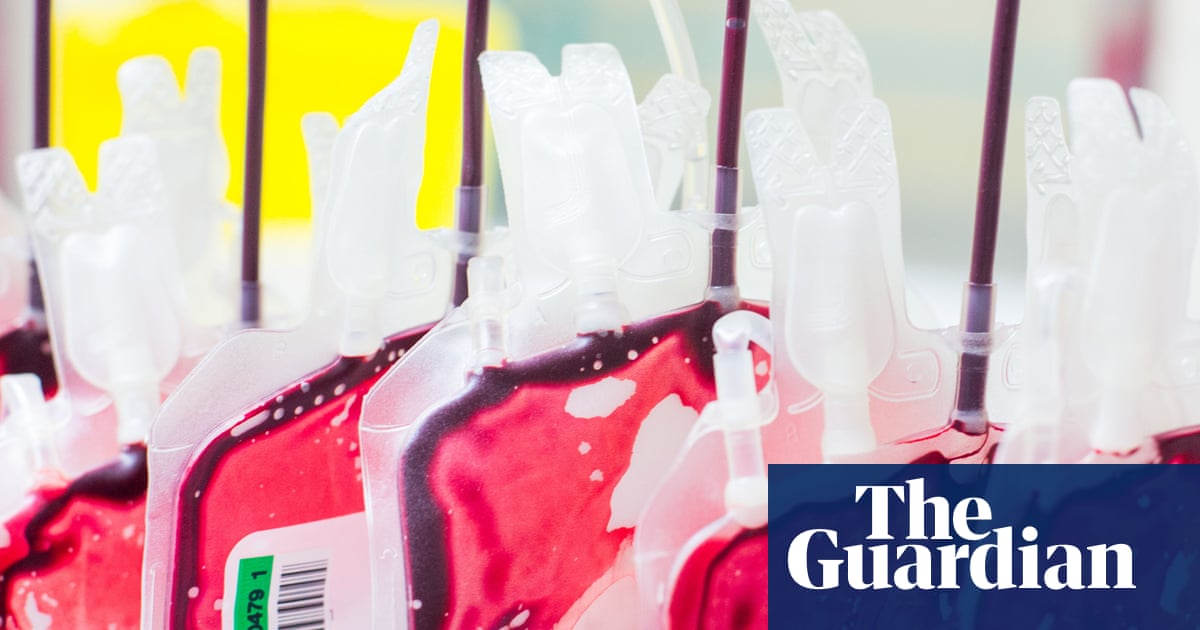
Hackers breached the control systems of industrial cold-storage facilities housing France's national blood reserves early this week, attempting to sabotage vital supplies by remotely cranking temperature dials past the boiling point. The breach struck three regional sites operated by the French Blood Establishment, the state agency responsible for supplying more than 1,900 hospitals nationwide[1].
The sabotage failed to destroy a single unit of blood. Rapidly sounding alarms and round-the-clock medical logistics teams intervened in time, manually shutting down compromised cooling units and moving bags of frozen plasma into disconnected, analog backup refrigerators. The incident marks an ominous escalation in a sprawling campaign of cyberattacks against commercial and industrial refrigeration systems that has hit food distribution across nearly a dozen European countries.
Midnight Breach on the Plasma Cold Chain
The intrusion occurred overnight between Sunday and Monday, infiltrating refrigeration controllers at three storage centers managed by the Établissement Français du Sang (EFS). [2]In statements confirmed by the French Health Ministry, agency officials explained that attackers manipulated digital parameters to trigger continuous defrost cycles and set thermal limits to extreme levels.
According to an investigation first reported by the French investigative weekly Le Canard enchaîné, the attackers reprogrammed freezer setpoints from standard freezing temperatures of minus 30 degrees Celsius up to 110 degrees Celsius. If[2] successful, the thermal shock would have destroyed biobank samples and degraded frozen plasma, an essential component used for severe trauma transfusions, burn treatments, and the manufacture of specialized pharmaceuticals.
The national operator emphasized that its operational safeguards held firm against the attack.
Although the EFS was not directly targeted by this cybersecurity incident, anomalies were reported, resulting in changes to the operating parameters of cold rooms equipped with the provider's solution. Specifically, temperature and defrost thresholds were set to very high temperatures.
French Blood Establishment (EFS), official statement
Speaking to Reuters, EFS spokesperson Charley Dubois noted that because blood and plasma must be available around the clock, medical and technical personnel were physically present when the automated telemetry sounded warnings. Workers immediately moved vulnerable materials into disconnected chillers, while engineers severed remote connections to halt external interference.
Third-Party Vulnerabilities and Industrial Controllers
French authorities quickly determined that hackers did not penetrate the blood service's internal hospital networks. Instead, the attackers entered through an external service provider handling temperature tracking and logistics equipment. Th[7]e European cooling equipment supplier Coolworld Rentals confirmed that a cybersecurity breach involving remote monitoring software had affected a small subset of units, citing an exploit in a third-party software component beyond its direct design control.
The breach highlights how third-party operational technology frequently functions as an insecure bridge into critical sectors. Across commercial supply chains, internet-connected environmental controllers allow centralized vendors to manage energy consumption and log temperatures. When those management consoles are exposed or inadequately patched, an attacker with valid credentials or an exploit can push malicious commands directly to physical machinery.
| Sector Targeted | Primary Impacted Assets | Observed Intrusion Effect | Operational Outcome |
|---|---|---|---|
| Supermarket Retail | Commercial display cases and warehouse chillers | Forced defrost; temperatures jumped to 50°C | Massive food spoilage; millions of euros in stock losses |
| National Blood Service | Plasma freezers and biological sample cold rooms | Controllers altered from -30°C to 110°C | Alarms triggered; supplies transferred without spoilage |
A Coordinated Campaign Across the Continent
The tampering at French blood facilities did not happen in a vacuum. It arrived in the middle of a coordinated wave of cyber intrusions targeting food retail infrastructure across Western and Northern Europe. Over [1]the previous weekend, grocery chains in Belgium, Sweden, Estonia, Ireland, the Netherlands, Luxembourg, and Finland reported unprompted temperature surges inside walk-in freezers, forcing stores to destroy vast amounts of perishable food.
The incident followed an October wave in France, where controllers at roughly 700 supermarkets were similarly reprogrammed into defrost mode, resulting in tens of millions of euros in spoilage. In the grocery sector, controllers manufactured by industrial automation firms were found exposed directly to the public internet, in many cases secured only by factory default credentials.
European Union spokesperson Thomas Regnier confirmed that bloc-level cybersecurity agencies are holding urgent talks with national authorities to establish collective defense protocols, stating that the strikes cannot be treated as isolated mishaps. Franc[1]e's national cybersecurity agency, ANSSI, alongside the Ministry of Health, has assumed control of the technical investigation.

The Attribution Void and Operational Reality
Despite the disruption, no criminal syndicate or state-sponsored group has claimed responsibility for the campaign, and European investigators have refrained from publicly naming culprits. The ambiguity leaves intelligence analysts weighing two divergent possibilities:
- Asymmetric Hybrid Warfare: Low-cost industrial sabotage designed to disrupt public services, test civil defense resilience, and generate psychological panic by targeting daily necessities like groceries and blood supplies.
- Automated Mass Exploitation: Cybercrime gangs utilizing opportunistic scanning scripts to locate internet-exposed industrial hardware, indiscriminately executing malicious temperature scripts across every address on a compromised server without regard for the nature of the facility.
French Health Minister Stéphanie Rist stated that all remote access portals linked to affected suppliers have been severed, with nationwide blood operations continuing without disruption. Yet for European infrastructure planners, the episode serves as a stark warning. Had th[9]e blood facilities operated without human overnight monitoring or disconnected mechanical backups, a few altered lines of digital code could have paralyzed France's emergency transfusion supply in a single evening.