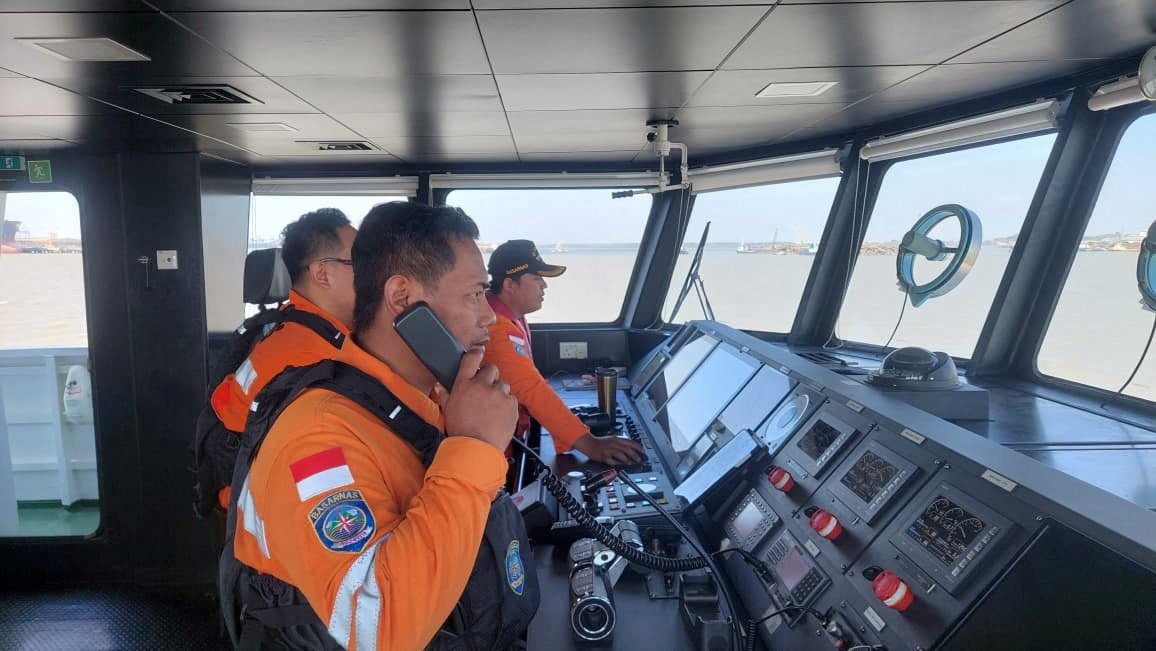
A major maritime search operation was underway across the central waters of Indonesia on Sunday after an inter-island passenger and vehicle vessel overturned in severe weather, leaving at least six dead and approximately 130 missing. Rescuers and passing commercial ships managed to pull 107 survivors from the choppy waters of the Java Sea as helicopters and naval cutters converged on the capsized hull[3].
The tragedy struck the Virgo Transport 8, a 119-meter roll-on/roll-off ferry traveling an overnight route between the main island of Java and Borneo. The vessel lost radio contact around 2:00 a.m. local time after sending an urgent report indicating heavy seas and severe listing, plunging hundreds of passengers and crew into darkness hours before daybreak.
Distress in the Dead of Night
According to reports from Agence France-Presse and local emergency authorities, the ferry departed Surabaya, Indonesia's second-largest metropolitan hub on Java, on Saturday morning destined for Banjarmasin in South Kalimantan. Scheduled to complete a routine crossing across one of Southeast Asia's busiest maritime transit corridors, the ship instead met sudden deteriorating weather midway through the Java Sea[4].
I Putu Sudayana, the head of the Banjarmasin Search and Rescue Office, confirmed that the ship's master radioed in distress after waves reached heights between 2.5 and 3 meters. The captain warned that the vessel was tilting sharply to one side before all radio and satellite transponder signals abruptly cut out. The local search agency, operating under Indonesia's national rescue body Basarnas, received formal notification of the emergency from the operator about two hours after communication ceased.
It is extremely risky for vessels. Even our Basarnas vessel, which is 40 metres long, is at great risk.
I Putu Sudayana, Head of the Banjarmasin Search and Rescue Office
The vessel's last recorded position was plotted roughly 80 nautical miles from its destination port at Banjarmasin, leaving emergency units to navigate surging swells to reach the scene.

Rescue Mobilization and Conflicting Sightings
Emergency operations escalated throughout Sunday as authorities deployed 280 personnel, eight specialized craft including four Indonesian navy ships, and two helicopters to sweep the surrounding waters. Before official rescue flotillas could arrive on site, commercial vessels in the vicinity responded directly to distress relays.
Initial survivor extractions relied heavily on civilian shipping: the tanker Aida rescued 49 passengers, while the tugboat Mahau 9 and additional industrial vessels brought dozens of others out of the water. Evacuees were diverted to ports in both South Kalimantan and East Java depending on medical severity. At Trisakti Port in Banjarmasin, emergency officials established temporary casualty reception centers, stationing roughly 30 ambulances and paramedic teams on standby as relatives crowded arrival gates scanning handwritten lists on whiteboards[4].
Early bulletins from regional rescue personnel suggested the ship had gone completely under, but Transportation Minister Dudy Purwagandhi clarified the operational picture during a press briefing in Banjarmasin. Helicopter surveillance confirmed that the ferry had turned upside down rather than immediately plunging to the seabed, remaining partially buoyant with its keel visible above the water[3].
From the information we received from the helicopter, the ferry had overturned, so it had not sunk.
Dudy Purwagandhi, Indonesian Transportation Minister
Minister Purwagandhi cautioned that search divers and aerial teams could not yet confirm whether dozens of unaccounted passengers remained trapped inside air pockets within the inverted hull or had been washed miles away by strong currents.
Manifest Uncertainties and Chronic Safety Pressures
According to the official departure manifest issued at Surabaya, the Virgo Transport 8 was carrying 243 individuals, comprising 213 passengers and 30 crew members, alongside a cargo of 89 vehicles. Official breakdown figures reported by local media indicated the passenger group included freight drivers, trade workers, and families traveling between islands.
Maritime specialists and international reporting networks note that manifest numbers in Indonesia often serve as baseline estimates rather than absolute counts. In an archipelago spanning more than 17,000 islands, ferries represent indispensable highways for millions of people and domestic cargo. Yet systemic problems with informal ticketing, unmanifested passengers, and shifting cargo weight frequently complicate disaster accounting[3] [11].
- Official Personnel Count: 243 individuals registered on the manifest, though search coordinators caution numbers may adjust.
- Cargo Aboard: 89 commercial and private vehicles stowed on vehicle decks.
- Vessel Profile: Built in Japan in 1987, the 119-meter ship was acquired by Indonesian operator PT Virgo Karya Shipping before entering service on the Java-Kalimantan run[3] [5].
- Casualty Status: Six confirmed deceased, 107 survivors rescued, and 130 people unaccounted for as dusk approached.
Transport Minister Dudy stated that harbor authorities in Surabaya cleared the ferry for sailing based on weather forecasts that indicated manageable sea states at the time of departure. Formal determinations regarding weight balance, mechanical conditions, and the potential shifting of unsecured vehicles inside the hold will be handled by the National Transportation Safety Committee (KNKT)[7].

A Recurring Vulnerability Across the Archipelago
The capsizing of the Virgo Transport 8 marks another severe test for Indonesia's maritime transportation sector, which has weathered recurrent fatal accidents over decades. Relying heavily on aging roll-on/roll-off ferries acquired second-hand from East Asian markets, regional operators face sharp weather fluctuations during transition seasons between regional monsoon cycles.
Sunday's accident unfolded just as regional maritime services faced scrutiny over fleet maintenance and emergency response protocols following multiple boat mishaps in Indonesian waters. With rough seas predicted to persist over the central Java Sea through early week, Basarnas officials announced plans to widen the search perimeter outward from the capsized vessel, racing against currents that threaten to sweep remaining survivors deeper into the open ocean.