
A federal judge in Mississippi has ruled that a high-profile Clean Air Act lawsuit against xAI can proceed to trial, rejecting the tech venture's bid to dismiss accusations that it bypassed federal environmental safeguards to power its flagship artificial intelligence supercomputers. The decision deals a setback to the company founded by Elon Musk, confirming that community advocates possess the legal standing to challenge industrial-scale generator emissions in federal court[3].
The ruling from U.S. District Judge Debra M. Brown comes just days after the same court rebuffed an attempt by the U.S. Department of Justice to intervene and unilaterally shut down the civil litigation. Represented by the Southern Environmental Law Center and Earthjustice, the NAACP contends that xAI installed dozens of fossil-fueled turbines without necessary preconstruction or operating permits, transforming a residential periphery outside Memphis into a major industrial pollution corridor.
Defenses Based on 'Mobile Sources' Crumble in Court
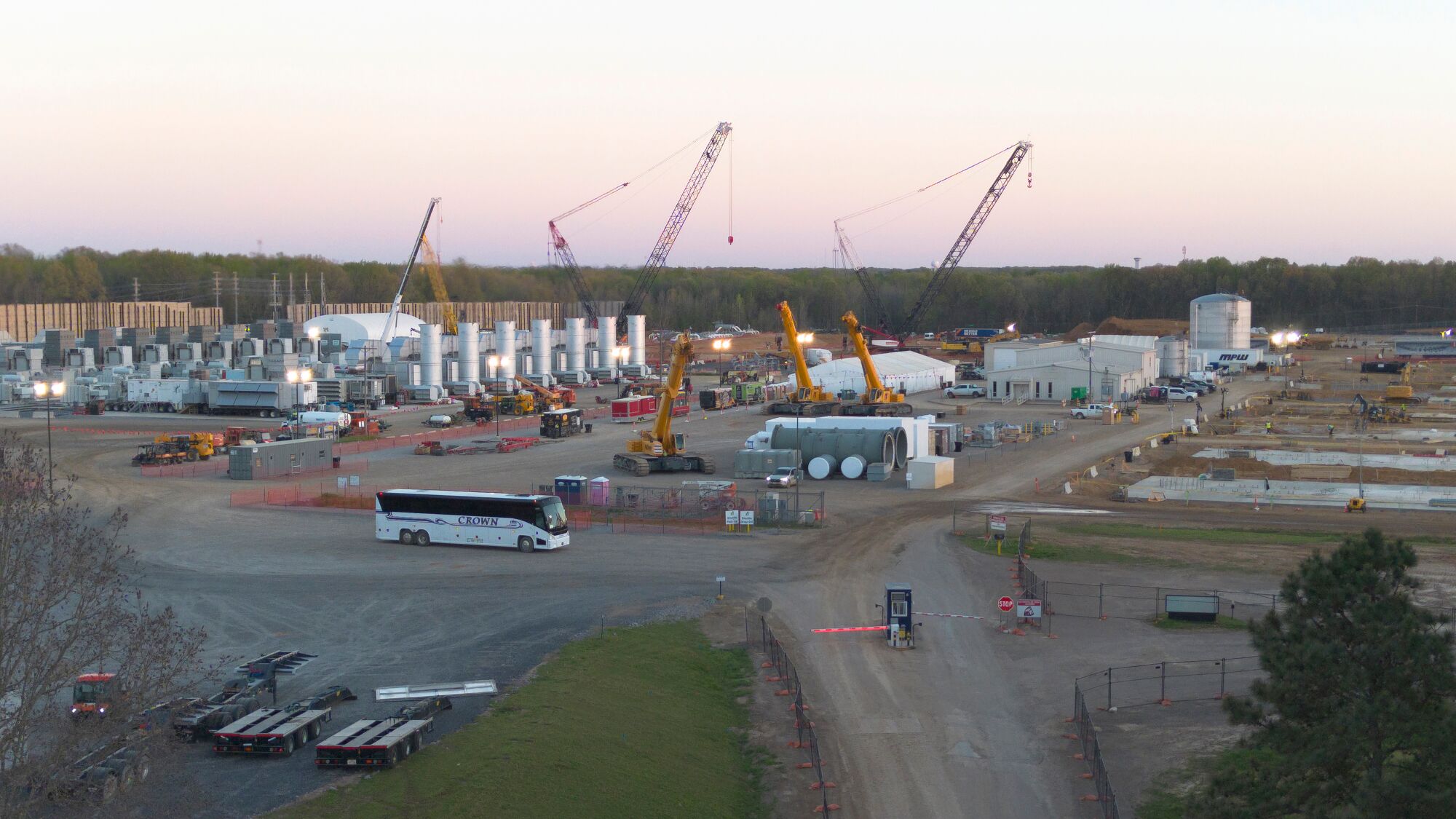
At the center of the dispute sits the dedicated generation capacity installed across the state line in Southaven, Mississippi, built to supply the electricity demanded by the Colossus and Colossus 2 supercomputer installations. In its motion to dismiss, xAI and its subsidiary MZX Tech LLC argued that the on-site gas turbines should be exempt from statutory preconstruction reviews because the units were designated as temporary and mobile equipment. State regulators at the Mississippi Department of Environmental Quality had initially signaled that portable turbines might not require full air permits[10].
Judge Brown firmly declined that argument, holding that the plant does not meet the federal definition of an exempt mobile source. Describing generation machinery as temporary, the court reasoned, does not insulate dozens of stationary combustion engines from the mandates of the Clean Air Act.
Because the plant is not a mobile source according to the federal regulations, the plant was not and is not exempted from permitting requirements under the Clean Air Act.
Debra M. Brown, U.S. District Judge
The court also tackled a broader constitutional defense raised by xAI, which asserted that private citizen lawsuits violate Article II by improperly usurping executive enforcement powers. Judge Brown dismissed that claim, noting that plaintiffs who initiate citizen suits pursue remedies on their own behalf to mitigate localized injuries, rather than exercising executive state authority.

The Battle Between Big Tech Speed and Local Lungs
The legal clash underscores the collision between Silicon Valley's race for compute supremacy and local environmental burdens. As TechCrunch reported, AI developers facing multi-year queues for municipal electrical hookups have increasingly deployed behind-the-meter generation. Installing gas-powered turbines allowed xAI to bring roughly 100,000 graphics processors online in record time, but it provoked intense neighborhood outcry[13].
Attorneys for the NAACP argue that the rapid rollout produced immediate health hazards for historically marginalized neighborhoods in North Mississippi and South Memphis[5] [7]. According to complaint filings cited by Earthjustice, the facility's combustion setup holds the potential to generate significant annual air pollution:
- Up to 5,000 tons of nitrogen oxides, a primary driver of urban smog.
- More than 400 tons of fine particulate matter capable of penetrating lung tissue[5].
- Over 47 tons of formaldehyde, an airborne carcinogen.
Abre' Conner, the director of environmental and climate justice at the NAACP, stated after the ruling that the organization intends to ensure commercial expediency does not bypass public health guarantees. The court's ruling does not deliver a final finding of liability, but it clears the factual claims for full evidentiary examination[6].
DOJ Intervention and Expanding Scrutiny
The procedural fight turned unusually complex over the summer when the Justice Department filed to intervene, seeking to dismiss the citizen action on executive prerogative and national security grounds. Federal government lawyers argued that interfering with private AI expansion risked domestic technological readiness. The Fifth Circuit Court of Appeals declined to freeze the litigation, and Judge Brown ruled on October 19 that while federal authorities may join the proceeding, the government cannot commandeer a citizen lawsuit simply to execute a unilateral dismissal.
Meanwhile, pressures on the ground continue to mount. Local outlets report that state regulators have separately targeted Southaven operational sites with millions of dollars in potential environmental enforcement penalties. Forbes revealed that xAI has offered buyout agreements to hundreds of nearby homeowners, requiring recipients to forfeit participation in nuisance litigation surrounding the site's vibration and exhaust noise.
As the case heads toward discovery, the proceeding in northern Mississippi stands as an early bellwether for the artificial intelligence industry. With major clusters straining electrical grids nationwide, the decision confirms that tech firms relying on rapid, stopgap fossil generation will have to justify their smokestacks in a public courtroom[3] [4].
Video