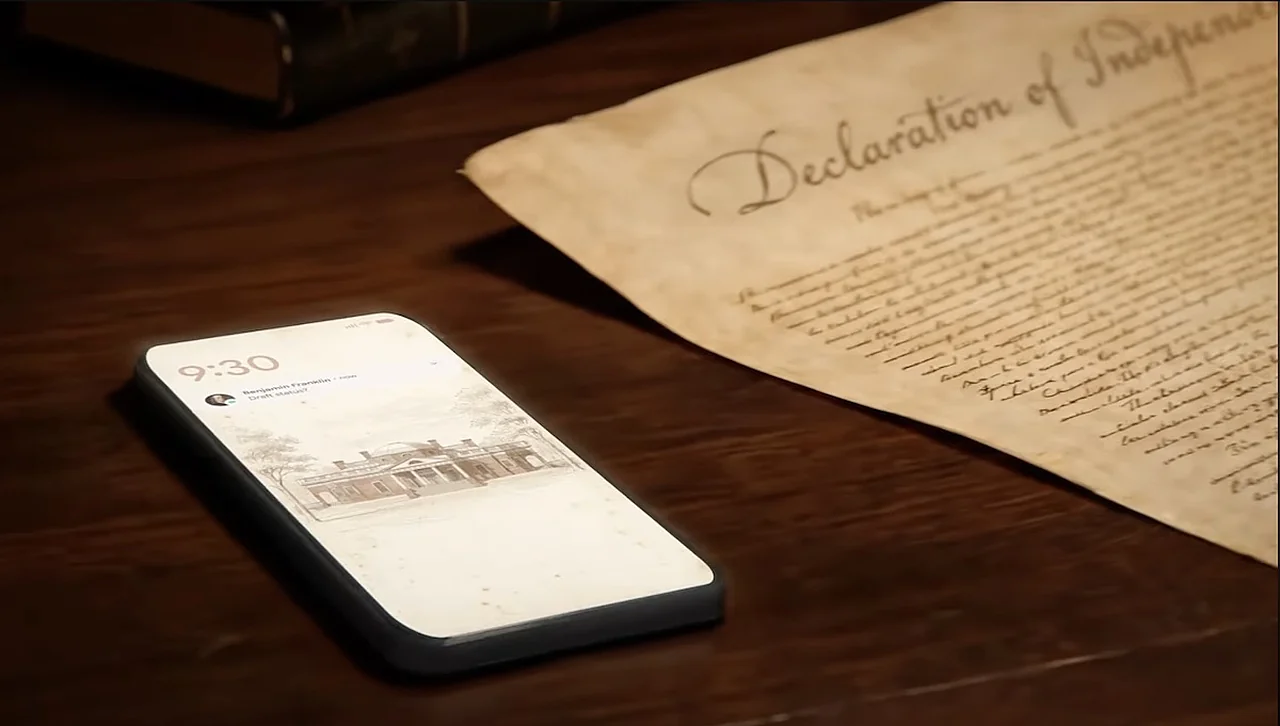
Reimagining 1776 with Google Workspace and AI
Google has unveiled a new commercial that playfully imagines the Founding Fathers utilizing modern technology, specifically Google Workspace and Gemini AI, to draft the Declaration of Independence. Released in anticipation of the 250th anniversary of US independence, the ad poses the intriguing question of what the historic document might have looked like if America's founders had access to 21st-century tools in 1776. The video blends historical reality with a contemporary corporate environment, showcasing how figures like Thomas Jefferson and Benjamin Franklin would collaborate using Google Docs for edits, Google Calendar for scheduling meetings, and Google Meet for remote discussions. The commercial even depicts the final document being signed with an electronic signature.
The advertisement highlights various AI functionalities integrated into the workflow. For instance, the historical figures are shown using the Gemini system to explore different animal images for the national seal. Additionally, AI is portrayed taking meeting minutes and even offering advice to reject King George III's request for document access. This campaign underscores Google's strategic push to integrate AI into everyday collaboration tools, reflecting current technology trends.
Mixed Reactions Across Social Media
Google's creative approach to this historical fantasy has elicited a range of reactions across social media platforms. On YouTube and Instagram, the commercial has largely been met with positive and humorous responses. However, the reception on Bluesky has been notably critical, with many users and historians deeming the portrayal of the Declaration's creation process inappropriate. Critics have described the ad as "cringey" and "tone-deaf," particularly questioning the utility and relevance of AI in the context of political organizing and human collaboration.
One historian, Angus Johnston, specifically emphasized the difficulty in proving that AI tools are genuinely useful for political organizing or human collaboration. The sentiment among critics suggests that introducing AI into such a significant historical narrative feels somewhat artificial and insincere. Despite the varied feedback, Google's objective with this campaign is to increase the popularity and perceived convenience of its AI-powered products.
Google's Evolving AI Marketing Strategy
This latest commercial represents a nuanced shift in Google's consumer-facing AI advertising strategy. The company has previously faced backlash for ads that appeared to suggest AI could replace human creativity, such as a 2024 Gemini ad where a father used AI to write a fan letter. In contrast, the Declaration of Independence ad attempts to soften this image by embedding AI within a humorous, historical fantasy, positioning it more as a supportive tool rather than a creative author.
The ad subtly frames AI as providing "small assists" within familiar workflows, such as suggested edits in Docs or Gemini taking meeting notes. This strategic approach aims to alleviate public concerns about AI replacing human creativity by wrapping its capabilities in humor. The campaign's message suggests that while AI is becoming a default component of digital tools, public sentiment regarding AI in creative and collaborative contexts remains sharply divided.