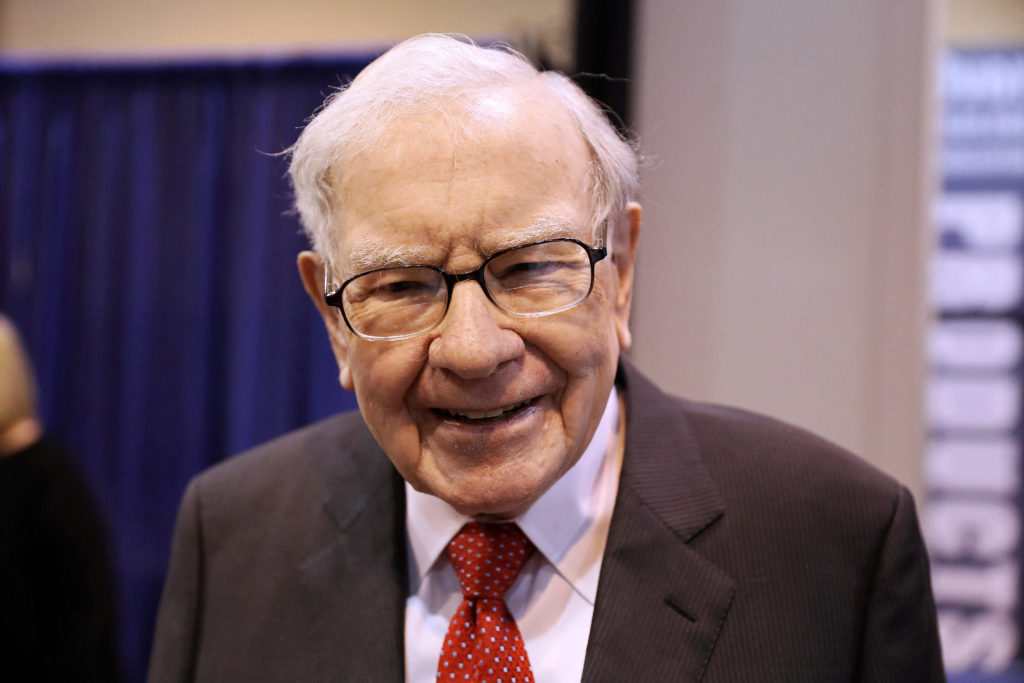
Warren E. Buffett has stepped down as chairman of Berkshire Hathaway, formally handing leadership of the board to his son Howard G. Buffett and completing one of the most closely watched corporate successions in modern financial history. The Omaha conglomerate announced on Friday that the 96-year-old billionaire investor will immediately assume the advisory title of Chairman Emeritus while retaining his seat as a member of the board of directors[1].
The appointment separates the oversight of the company from its operational command, an arrangement designed across decades to preserve the decentralized structure of an empire valued at roughly $1.1 trillion. While Chief Executive Officer Greg Abel took total operational control of the enterprise at the beginning of 2026, Howard Buffett will serve as non-executive chairman, tasked with maintaining governance practices and shielding the corporate ethos that Warren Buffett and the late Charlie Munger cultivated over six decades[2] [3].
The Architecture of a Long-Planned Succession
The decision to install Howard Buffett as chairman reflects a succession plan that the elder Buffett began outlining to shareholders more than a decade ago. According to Berkshire Hathaway's formal announcement, the board voted unanimously to elect Howard, who has served as a director on Berkshire's board for 33 years since his initial election in 1993. Susan L. Decker will remain in her post as lead independent director to preserve board balance.
In a letter released to shareholders on Friday, Warren Buffett addressed the passage of time directly, reassuring investors that the business was structurally insulated from leadership volatility[1].
Father Time always wins. He has, however, been generous with me. He has given me the opportunity to see Berkshire reach a point where I am more confident than ever about what lies ahead.
Warren Buffett, Chairman Emeritus of Berkshire Hathaway
The elder Buffett took control of Berkshire Hathaway in 1965 when it was a struggling New Bedford textile manufacturer, eventually becoming board chairman in 1970. Over the subsequent half-century, he transformed the operation into a sprawling multinational holding firm encompassing retail brands, energy grids, freight rail networks, and a massive insurance balance sheet. Writing to shareholders, Buffett outlined the explicit division of power between his operational successor and his son: Greg runs the company, while Howard will guard its culture and values.

Howard Buffett and the Boardroom Mandate
At 71, Howard Buffett steps into the chairmanship with a background distinct from Wall Street financiers. An active farmer, conservationist, and former sheriff, he has served since 1999 as chairman and chief executive of the Howard G. Buffett Foundation, directing hundreds of millions of dollars toward agricultural development, global food security, and conflict mitigation programs in places such as Ukraine and Central Africa. He previously served as a United Nations Goodwill Ambassador Against Hunger for the World Food Programme[1].
Despite not coming from an investment banking pedigree, Howard has accrued decades of corporate board governance experience across agricultural and consumer giants. As corporate disclosures detail, he has served on public and private boards including Archer Daniels Midland, The Coca-Cola Company, ConAgra Foods, and Lindsay Corporation, where he previously served as board chairman.
Berkshire leadership emphasized that Howard Buffett's primary responsibility will not be picking common stocks or negotiating industrial acquisitions. In an official statement on behalf of the board, Chief Executive Officer Greg Abel noted that the culture Warren built remains central to Berkshire, calling Howard the designated guardian of those core institutional principles. In past annual meetings, Warren Buffett frequently described the non-executive chairman role as an internal safeguard, specifically designed to protect company managers from hostile interventions or board-level compromises if a future chief executive ever strayed from Berkshire's operational standards[3].
Market Realities and Corporate Continuity
Investor response to the announcement was measured, signaling that markets had fully priced in the leadership blueprint. Market data compiled by LSEG indicated Berkshire's Class B shares dipped just 0.3 percent in early trading following the news release. Christopher Rossbach, chief investment officer of longtime shareholder J Stern & Co, told the Financial Times that the formal handover completed a transition that had been prepared systematically across years.
Annex Wealth Management chief economic strategist Brian Jacobsen noted in market commentary that the move felt like the orderly execution of an existing roadmap rather than a sudden corporate shock. Even so, market analysts track what has historically been labeled the Buffett premium. According to LSEG tracking figures cited by Reuters, Berkshire's price-to-book multiple experienced modest compression throughout 2026, sliding from around 1.62 to roughly 1.53 after Abel took over daily managerial duties[9].
| Executive Role | Incumbent Leader | Core Operational Mandate |
|---|---|---|
| Chairman Emeritus & Director | Warren E. Buffett | Advisory perspective, long-term shareholder representation |
| Chairman of the Board | Howard G. Buffett | Board oversight, cultural governance, capital discipline defense |
| President & Chief Executive Officer | Greg Abel | Direct management, capital deployment, non-insurance operating subsidiaries |
| Vice Chairman, Insurance Operations | Ajit Jain | Underwriting operations, insurance float management across GEICO and Gen Re |
The operational framework beneath the chairman seat remains steady. Longtime vice chairman Ajit Jain continues to steer Berkshire's critical underwriting machinery. Financial filings for the second quarter of 2026 indicated Berkshire's insurance float reached approximately $177.5 billion, providing the liquidity engine that drives the broader conglomerate.

The Challenges Facing an Independent Berkshire
The ultimate test confronting Howard Buffett and Greg Abel involves sustaining the sprawling conglomerate without its iconic founder directing capital allocations. Financial author Adam Mead, writing in The Complete Financial History of Berkshire Hathaway, pointed out that taking this step at 96 minimizes institutional disruption ahead of Buffett's eventual passing, allowing the dual-track structure to operate under real-world conditions.
Unresolved questions persist regarding the speed of future capital allocation. Berkshire holds record cash reserves, and finding large-scale acquisitions capable of moving the needle on a trillion-dollar valuation remains difficult. Warren Buffett also initiated a stepped-up divestment schedule for his personal wealth in July, setting a target to distribute his remaining company shares to family-led charitable foundations within roughly eight years. As those voting blocks shift to foundations over the next decade, Howard Buffett's steady hand at the helm of the board will serve as the primary institutional bulwark maintaining Berkshire Hathaway's distinct operational independence[2].