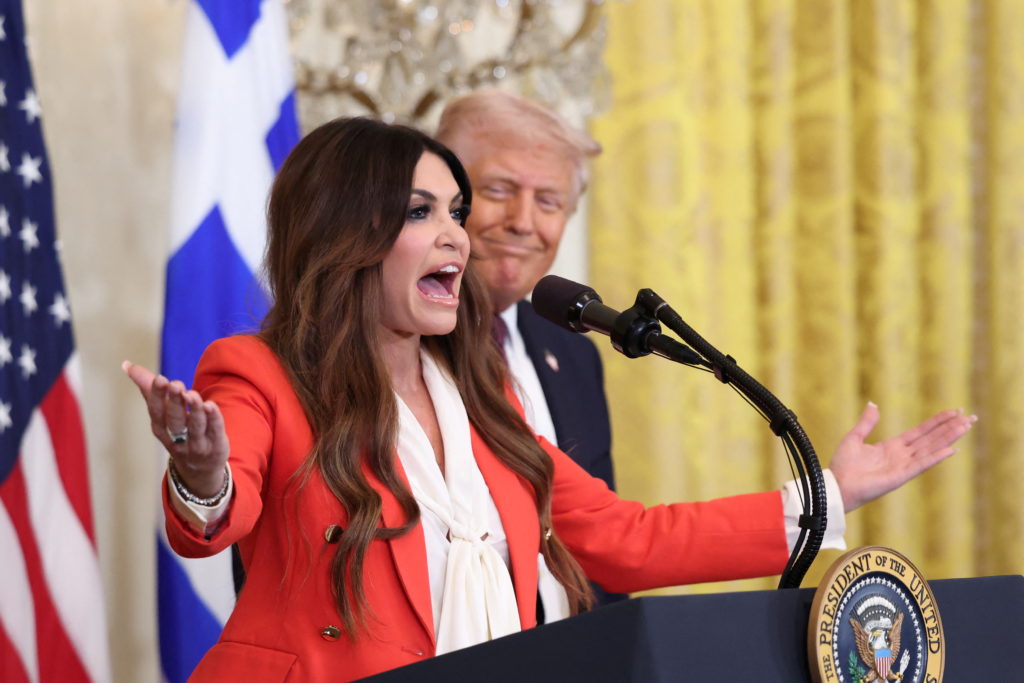
The White House forced the sudden resignation of Kimberly Guilfoyle as U.S. ambassador to Greece on Tuesday following escalating allegations of influence peddling, improper corporate favoritism, and personal financial misconduct. Her exit removes a high-profile political surrogate and longtime ally of President Donald Trump from one of NATO's strategically sensitive diplomatic posts[2].
The announcement broke during a morning press briefing held by the newly appointed White House press secretary, Katie Zacharia, who bluntly revealed that the administration had demanded Guilfoyle step down. The decision followed days of public reporting detailing an alleged pay-to-play scheme, culminating in Guilfoyle submitting her formal resignation while continuing to protest her innocence.
A Public Ouster at the White House Briefing Podium
The administration moved quickly on Tuesday to cut ties with Guilfoyle as political pressure mounted on Capitol Hill. Press secretary Katie Zacharia delivered the news in her briefing room debut, offering only a brief acknowledgement of the envoy's service[4].
We have asked Ambassador Guilfoyle to resign. She has been a wonderful asset to the team, and we wish her well.
Katie Zacharia, White House Press Secretary
President Donald Trump reinforced the decision while speaking with reporters on the South Lawn, expressing dissatisfaction with recent reports outlining her conduct in Athens. As CBS News reported, Trump told reporters that he did not like what he had read and confirmed she would no longer represent the administration overseas. Hours later, an administration official confirmed to ABC News that the White House had formally received Guilfoyle's letter of resignation.
Guilfoyle took to social media to acknowledge her departure, declaring that serving as envoy was the honor of a lifetime while pledging continued loyalty to Trump. In her statement on X, she asserted that the accusations were completely unfounded, writing that she intends to vigorously defend her name, reputation, and integrity against what she characterized as false claims.

The Donor Quid Pro Quo and Luxury Travel Allegations
The catalyst for the sudden removal was an investigative series published by The Wall Street Journal, which detailed multiple episodes of questionable conduct before and during Guilfoyle's tenure in Athens. The most damaging allegation centered on communications between Guilfoyle and Republican donor Eric Deters. Citing text messages, the Journal reported that Guilfoyle asked Deters to wire $100,000 directly toward her personal American Express bill in exchange for securing meetings with senior administration officials[10] [12].
Subsequent reporting uncovered further ethical red flags regarding corporate ties and luxury travel. Investigators and journalists examined claims that Guilfoyle:
- Advocated for the commercial interests of the Greek construction and energy conglomerate Aktor Group while granting its lobbyist entry to private diplomatic meetings.
- Flew on a private jet to the January 2026 World Economic Forum alongside Aktor Group chief executive Alexandros Exarchou[11].
- Accepted private jet travel and accommodations paid for by a Greek shipping magnate.
- Told diplomatic guests at a private reception that Washington retained the leverage to destabilize or undermine the Greek government at will.
Guilfoyle's legal counsel, David Schwartz and Jesse Binnall, pushed back vigorously against the claims. In a formal defense statement, the attorneys maintained that the funds sought from Deters were legitimate, overdue compensation for speaking appearances and public work conducted before her diplomatic nomination. The attorneys further insisted that Guilfoyle followed all State Department guidance and travel ethics rules prior to boarding private flights[6].
Escalating Congressional Inquiries and Oversight
The controversy generated swift bipartisan concern on Capitol Hill, where several committees opened investigations into diplomatic conduct and foreign policy interference. Leading lawmakers warned that the alleged transactions represented a potential threat to national security and clean governance.
| Lawmaker or Official | Role / Affiliation | Action Taken |
|---|---|---|
| Gregory Meeks | Top Democrat, House Foreign Affairs | Sent formal inquiry to Marco Rubio warning of corrupt influence on foreign policy |
| Robert Garcia | Top Democrat, House Oversight | Demanded financial and communications records regarding donor payments |
| John Barrasso | Senate Majority Whip (R-Wyo.) | Called the reports very troubling and predicted congressional investigations |
| State Dept. OIG | Internal Watchdog | Initiated formal administrative probe into embassy compliance and ethics rules[9] |
Secretary of State Marco Rubio found himself entangled in the controversy after traveling to Athens on official business while the allegations surfaced. According to PBS News reporting on internal diplomatic discussions, State Department officials noted that Rubio was particularly displeased by the unfolding scandal, especially after Guilfoyle greeted him prominently at diplomatic events during the visit despite the active scrutiny[10].
Political Fallout Ahead of the Midterms
The ouster comes at a delicate political moment for the White House. With congressional midterm elections approaching, Republican strategists have expressed anxiety that high-profile ethical controversies could distract from core legislative messages and harm competitive congressional candidates.
While the administration sought to draw a swift line under the matter by terminating Guilfoyle's appointment, the legal and congressional repercussions remain active. The State Department inspector general review and House committee document requests will proceed despite her resignation, ensuring that the former television personality and top campaign surrogate remains under official examination for the foreseeable future.
Video
Kimberly Guilfoyle resigns as U.S. ambassador to Greece amid misconduct allegations →