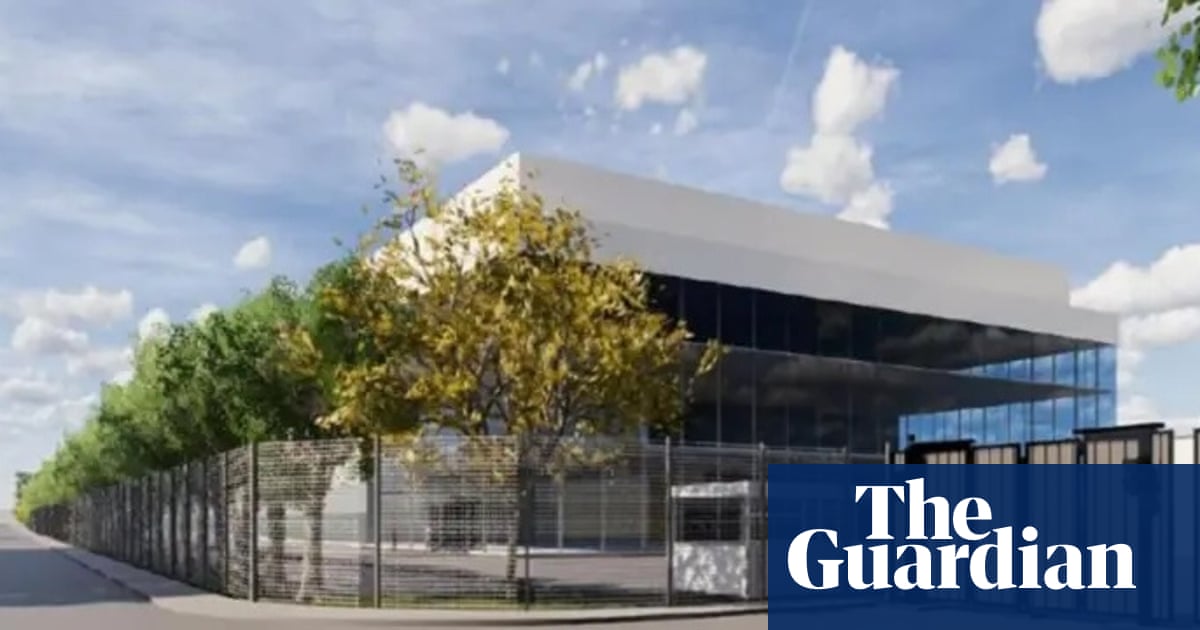
Microsoft has terminated its agreement to lease computing capacity at a flagship artificial intelligence data centre in Loughton, Essex, dealing a sharp blow to Britain's sovereign digital infrastructure plans. The decision leaves British cloud provider Nscale without an anchor tenant for what ministers had promoted as the nation's premier AI computing campus[3].
The cancellation came after grid operators told developers that sufficient electrical power for the site would not be available until the 2030s, according to reports published by The Telegraph and corroborated by the Financial Times. The setback highlights an intensifying collision between the tech industry's insatiable appetite for AI computing power and the realities of aging national utility grids that cannot deliver gigawatts on commercial timetables[4].
Grid Bottlenecks Break the 2027 Schedule
The Loughton facility was designed to house the UK's largest artificial intelligence supercomputer, featuring 23,000 advanced Nvidia GB300 chips across a 50-megawatt deployment, as the Financial Times reported. Microsoft had planned to lease the site's entire initial electrical capacity. When announced in 2025 as part of a wider £22 billion investment plan into the country, the project was championed by Prime Minister Sir Keir Starmer as proof that Britain would anchor global artificial intelligence infrastructure.
The original timeline called for operations to begin as early as 2026 or 2027. That schedule collapsed after regional grid authorities, including local distribution operator UK Power Networks, informed project developers that the local transmission network could not supply the required load until the next decade. Facing a multi-year hiatus before the facility could energize a single server rack, Microsoft pulled out rather than hold stranded reservations.[1]
The table below summarizes the core parameters of the scrapped Essex project:
| Project Parameter | Original Target | Current Reality |
|---|---|---|
| Anchor Tenant | Microsoft (100% of 50MW capacity) | Withdrawn; no anchor tenant |
| Hardware Deployment | 23,000 Nvidia GB300 processors | Suspended pending power supply |
| Target Online Date | 2026 to 2027 | Delayed to 2030s by grid constraints |
| Regulatory Role | Flagship UK Sovereign AI Centre | Seeking alternative off-grid energy sources |
A Complication for Nscale's Impending Flotation
The departure of Microsoft arrives at an awkward moment for Nscale, a specialized cloud provider backed by Nvidia, which features high-profile board figures including former Meta executives Sheryl Sandberg and Sir Nick Clegg. The start-up filed paperwork last month for a New York initial public offering targeting a valuation of up to $35 billion, seeking to raise as much as $3 billion in fresh capital, according to Reuters and The Telegraph.
Filings submitted ahead of the float reveal that Nscale depends heavily on just two foundational customers, Microsoft and AI model maker Anthropic, which together represent approximately 85% of its total contracted revenue. While Anthropic committed to a multibillion-dollar compute arrangement over six years, losing the Essex lease removes a signature domestic venue from Nscale's portfolio.[2]
A spokesperson for Nscale insisted that the wider commercial relationship between the two companies remains undisturbed, stating to Reuters:
Our relationship with Microsoft remains strong and long-term, and this unfortunate London-wide grid issue has no impact on our other contracts.
Nscale spokesperson, statement to Reuters
The company added that it remains committed to Loughton and the wider British market, actively exploring private power generation, behind-the-meter generation, and alternative expansion locations. People familiar with the contracts also told the Financial Times that the 50MW Essex arrangement constituted a relatively small fraction of Microsoft's aggregate commitments to Nscale, which include operational facilities and developments in Norway and the United States.

The Neocloud Bubble Meets Physical Limits
Nscale is part of a wave of specialized "neocloud" providers, including CoreWeave, Nebius, and Lambda Labs, that borrow heavily against future lease income to purchase high-end graphic processing units and build custom data halls. However, market tolerance for infrastructure execution stumbles has narrowed sharply.[8]
Nscale has experienced infrastructure headwinds before. Bloomberg News reported that the company's flagship European data campus in Norway fell roughly six months behind its targeted deployment schedule, with only 6.4 megawatts operational out of a planned 30 megawatts. Public markets have shown similar unease toward debt-fueled AI compute buildouts; CoreWeave shares slumped 25% in recent trading, and Australian developer Firmus withdrew its planned $20 billion public offering after encountering cool investor reception.
Industry analysts point out that while cloud customers want immediate GPU capacity, the lead times required for high-voltage substations, transformer procurement, and national grid capacity expansions often measure five to eight years across Western Europe. For hyperscalers like Microsoft, which are spending tens of billions of dollars per quarter on AI capital expenditures, waiting until the 2030s for electricity is simply an untenable option.
Political Fallout for British AI Ambitions
The unraveling of the Loughton deal also poses uncomfortable questions for the UK government. Ministers had promoted the Essex supercomputing hub as a triumph for domestic industrial strategy, arguing that Britain could host the computational core of next-generation technology without depending entirely on overseas data campuses.[3]
Instead, the project has exposed how regional infrastructure bottlenecks threaten British technology policy. Greater London and the surrounding Southeast of England have seen electrical substations overwhelmed by competing demands from urban housing construction, industrial electrification, and commercial data developments. Grid queues have lengthened, leaving dozens of prospective high-capacity projects stranded in multi-year connection queues.[14]
While Microsoft continues to invest in British cloud assets where power is already secured, its exit from Loughton underscores a sobering reality for European tech ambitions: software and capital can move at lightning speed, but artificial intelligence remains bound to the physical constraints of transformers, transmission lines, and power plants.