
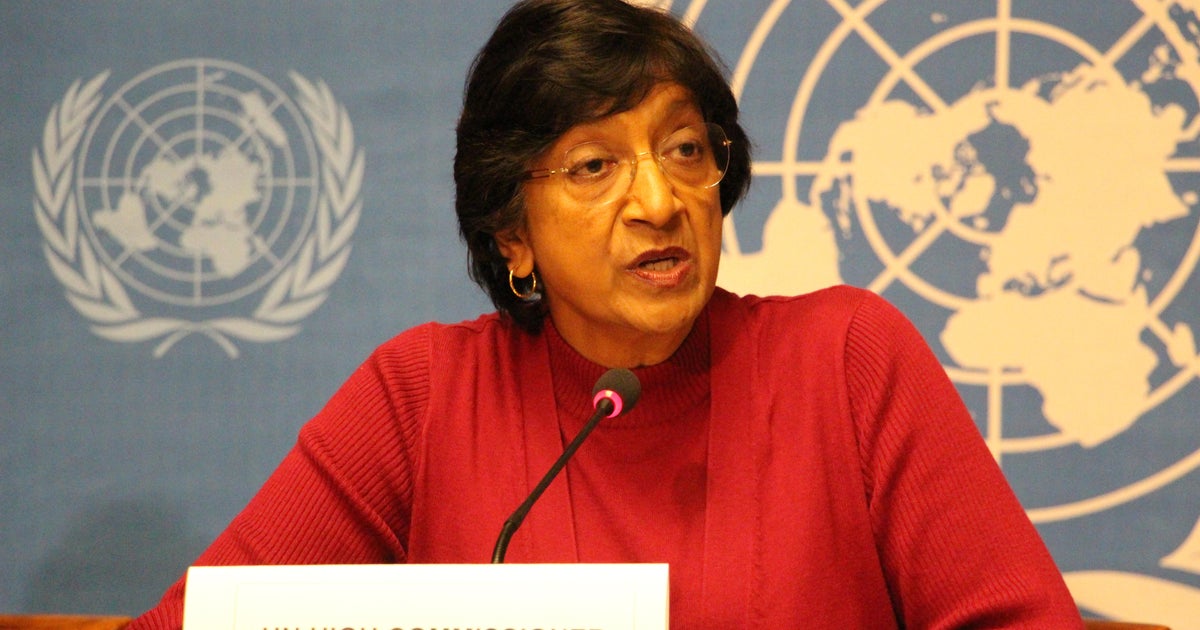
The Norwegian Nobel Committee awarded the 2026 Nobel Peace Prize to veteran South African jurist Navanethem "Navi" Pillay on Friday, citing her lifelong devotion to international law, human rights, and the prosecution of mass atrocities. The decision places the eighty-five-year-old former United Nations human rights chief directly at the center of an escalating global confrontation between multilateral tribunals and nationalist leaders who dispute their legitimacy[3].
Speaking from Courtroom 600 of the Nuremberg Palace of Justice in Germany, the historic venue of the post-World War II trials where she was attending a legal conference, Pillay told reporters she was surprised and touched by the announcement. Outside the conference hall, however, the prize triggered swift and polarized geopolitical reactions, drawing fierce denunciations from political leaders whose policies her tribunals and commissions had scrutinized.
A Defense of the Global Legal Order
In Oslo, Norwegian Nobel Committee Chair Jørgen Watne Frydnes framed the decision as an intentional defence of judicial institutions currently undergoing severe political strain. In remarks reported by the Associated Press and CBS News, Frydnes warned of a dangerous global slide toward raw power politics at the expense of binding treaties and universal accountability.[7]
The system of international law is under tremendous pressure and its institutions are under attack.
Jørgen Watne Frydnes, Chair of the Norwegian Nobel Committee
The committee explicitly referenced the rising incidence of armed conflicts worldwide, cautioning that bypassing legal structures leaves the world vulnerable to violence and impunity. According to UN News, United Nations Secretary-General António Guterres praised the award, calling Pillay an independent voice of justice who demonstrated that the force of law must prevail over the law of force.
From Anti-Apartheid Defense to Global Tribunals
Pillay's legal career spans more than five decades, beginning under South African apartheid. Born into an Indian Tamil working-class family in Durban, she overcame structural disenfranchisement to establish her own law practice in 1967 and defend political prisoners, including future president Nelson Mandela. S[1]he later became the first South African woman of color to earn a doctorate in juridical science from Harvard Law School and the first woman of color appointed to South Africa's High Court.
The Nobel Committee highlighted her pioneering international work across multiple institutions:
- International Criminal Tribunal for Rwanda (ICTR): Appointed in 1995 and later serving as its president, Pillay authored landmark rulings establishing that systematic rape and sexual violence constitute acts of genocide and crimes against humanity.
- International Criminal Court (ICC): She served as an appellate judge in The Hague from 2003 until 2008, helping establish foundational case law for the permanent court.
- UN High Commissioner for Human Rights: Between 2008 and 2014, she led global human rights monitoring, repeatedly advocating for civilian protections across war zones.
- International Court of Justice (ICJ): She currently sits as an ad hoc judge hearing Gambia's genocide case against Myanmar concerning the persecuted Rohingya minority.

Political Backlash Across Capitals
The committee's choice was widely interpreted by diplomatic observers as a direct rebuke to leaders who have attacked multilateral courts. Israeli officials vehemently objected to the award, pointing to Pillay's leadership of the United Nations Independent International Commission of Inquiry on the Occupied Palestinian Territory, which concluded that Israel committed genocide during its military operations in the Gaza Strip.
Reaction in the United States was equally pointed. BBC World reported that former president Donald Trump attacked Norway and the Nobel committee during a campaign rally, calling the selection a stain on the country and asserting that he had never heard of Pillay. The remarks reflect broader friction between Washington and international bodies; as CBS News noted, the Trump administration previously imposed sanctions on International Criminal Court officials after the court sought arrest warrants for Israeli leaders.
In Germany, Pillay struck a defiant yet humorous tone when addressing colleagues after the announcement. A[10]ccording to video footage of her remarks, she quipped that she might share the prize with Trump if the audience clapped loud enough, before emphasizing that telling the truth under international law should never be considered an act requiring extraordinary courage.
Institutional Scrutiny and Lingering Criticisms
While celebrated by human rights advocates and international bar associations, Pillay's lengthy career has also drawn scrutiny from advocacy watchdogs. Watchdog groups such as UN Watch criticized the Norwegian committee's decision, recalling complaints from former United Nations staff members regarding the treatment of human rights reporting during her tenure in Geneva. Critics also pointed to her delay in formally condemning the Iranian government's crackdowns on peaceful protestors following the disputed 2009 presidential election.
Supporters emphasize that navigating the competing demands of sovereign states while defending universal legal baselines is the inherent dilemma of international jurisprudence. B[13]y honoring Pillay, the Nobel committee signaled its conviction that independent judges remain indispensable to preserving whatever fragile peace the global community can muster.
Video
Navi Pillay wins the Nobel Peace Prize for her work in international justice • FRANCE 24 English →