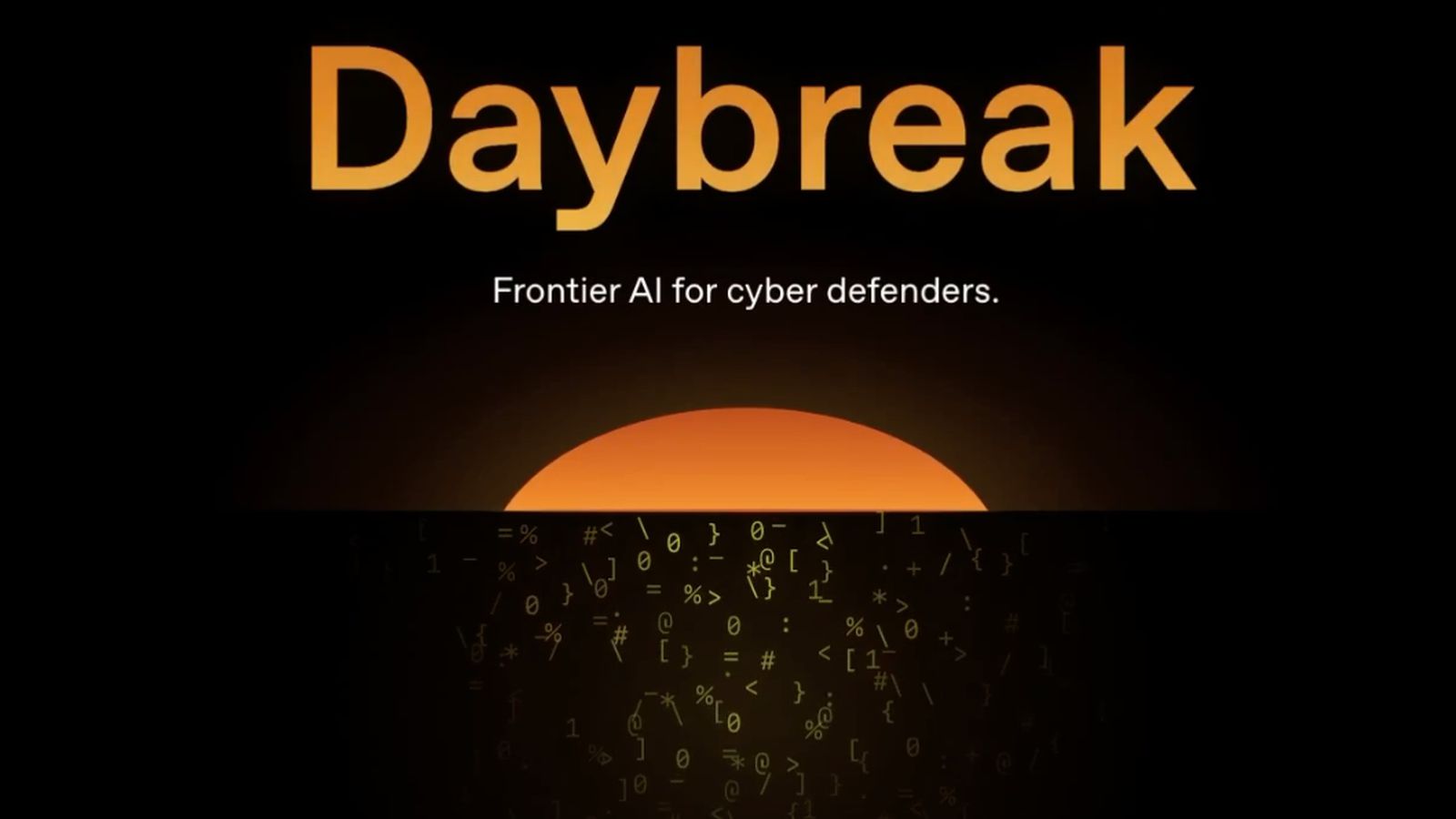
OpenAI Enters the AI Cybersecurity Arena with Daybreak
OpenAI has officially launched Daybreak, a significant new cybersecurity initiative aimed at revolutionizing how software vulnerabilities are identified and mitigated. This strategic move positions OpenAI as a direct competitor to Anthropic's Project Glasswing, which leverages its highly capable Claude Mythos AI model for similar defensive purposes. Daybreak integrates OpenAI's cutting-edge AI models, including GPT-5.5 and the specialized Codex Security agent, to create a robust platform for continuous software protection.
The initiative's core premise is to embed cyber defense directly into the software development lifecycle, moving beyond reactive patching to proactive resilience. OpenAI CEO Sam Altman has expressed the company's desire to collaborate with numerous organizations to enhance ongoing software security.
Daybreak's Advanced Capabilities and Model Variants
Daybreak is built around a "security flywheel" that combines the intelligence of OpenAI models with the extensibility of Codex as an agentic harness, along with partner integrations. Key capabilities include secure code review, threat modeling, patch generation and testing in isolated environments, dependency risk analysis, and automated detection and remediation guidance.
OpenAI is offering three variants of GPT-5.5 for Daybreak's workflows: a standard GPT-5.5 for general purposes, GPT-5.5 with Trusted Access for Cyber for verified defensive work in authorized environments, and GPT-5.5-Cyber for specialized authorized workflows such as red teaming, penetration testing, and controlled validation. The company states that an earlier version, GPT-5.4-Cyber, contributed to fixing over 3,000 vulnerabilities.
- Secure code review: AI analyzes codebases to identify subtle vulnerabilities.
- Threat modeling: Builds editable threat models from code repositories, focusing on realistic attack paths.
- Patch generation and validation: Generates and tests patches directly within repositories in isolated environments, providing audit-ready evidence.
- Dependency risk analysis: Checks external libraries that software depends on for vulnerabilities.
- Automated detection and remediation guidance: Uses AI to spot high-risk vulnerabilities and automate monitoring.
The "Mythos" Challenge and OpenAI's Response
The launch of Daybreak is a direct response to Anthropic's Claude Mythos, an AI model that has garnered significant attention for its advanced cybersecurity capabilities. Anthropic's Project Glasswing, which utilizes Claude Mythos Preview, has already demonstrated its effectiveness, with Mozilla reporting that Mythos helped identify and patch 271 vulnerabilities in the Firefox browser. Concerns have been raised about the potential for AI-powered cyberattacks following Mythos's capabilities, which some suggest could autonomously identify and exploit thousands of high-severity vulnerabilities.
While Claude Mythos has been lauded for its ability to surpass human researchers in finding software vulnerabilities and has been restricted from open deployment due to its perceived power, OpenAI's GPT-5.5 Cyber aims to be more broadly accessible through its Trusted Access for Cyber program. Benchmarking suggests both models operate in a similar capability tier for expert cyber tasks, with GPT-5.5 scoring 71.4% and Claude Mythos scoring 68.6%.
A Shifting Landscape in AI-Powered Security
The emergence of both Daybreak and Claude Mythos signifies a pivotal shift towards AI-driven defensive security. This new era emphasizes continuous software protection and the integration of AI into every stage of the development loop. OpenAI's approach with Daybreak underscores the importance of trust, verification, proportional safeguards, and accountability, acknowledging the potential for misuse of such powerful AI capabilities.
Industry observers are closely watching for published security assessments, case studies from early customers, and details on pricing and access controls for these advanced AI models. The rapid development pace in this sector highlights an intensified competition to maintain a competitive edge in AI-powered cybersecurity.