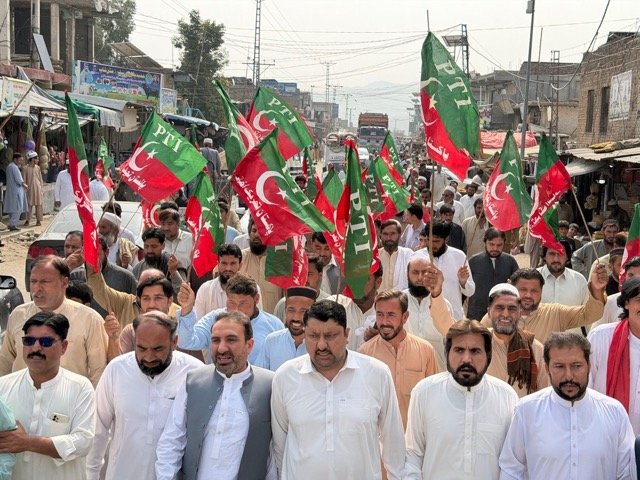
Pakistan's federal government has imposed a state of emergency and suspended the provincial administration in Khyber Pakhtunkhwa, effectively stripping the party of imprisoned former Prime Minister Imran Khan of its last remaining provincial power base. President Asif Ali Zardari signed the proclamation after receiving recommendations from Prime Minister Shehbaz Sharif's cabinet, invoking Articles 232 and 234 of the nation's constitution[3].
The intervention marks a dramatic escalation in Pakistan's prolonged political turmoil, unfolding against a backdrop of intensifying security threats along the Afghan frontier. Following the decree, federal authorities detained provincial Chief Minister Sohail Afridi alongside multiple party members, while security forces deployed heavy blockades and shipping containers across the regional capital of Peshawar[5].
National Security Justification and Counterterrorism Claims
Federal officials defended the extraordinary measures by pointing to a sharp deterioration in regional security and a breakdown in administrative cooperation. Law Minister Azam Nazeer Tarar stated during a press briefing in Islamabad that the fundamental grounds for the emergency proclamation involved restoring law and order, combating terrorism, and protecting citizens from violent attacks. Interior Minister Mohsin Naqvi added that the security environment in parts of the province had grown so perilous that residents routinely remained inside after dark.
Expanding on the federal rationale, Information Minister Ataullah Tarar alleged that the provincial administration led by Khan's Pakistan Tehreek-e-Insaf (PTI) party had failed to counter militant networks and maintained compromising links to armed groups. Islamabad has repeatedly accused the Afghan Taliban of harboring the Tehreek-e-Taliban Pakistan (TTP), asserting that more than 6,000 TTP fighters operate from safe havens across the border. Deputy Prime Minister Ishaq Dar maintained that the measures were strictly security-driven rather than politically motivated, noting that Pakistan has shouldered the burden of hosting millions of refugees for decades[8].

The Political Fallout and Accusations of a Power Grab
PTI leaders and opposition figures roundly rejected the federal justification, framing the suspension as an authoritarian intervention disguised as a counterterrorism initiative. Former President Arif Alvi denounced the emergency decree on social media as the final nail in the coffin of democracy, asserting that the federal administration had bypassed the will of the local population. Party chairman Gohar Ali Khan similarly labeled the action an alarming and grave political mistake.
International human rights monitors have also raised alarm regarding the proportionality of the federal response. In an official statement, Amnesty International's Deputy Director for South Asia, Babu Ram Pant, warned that emergency powers must not serve as a blank check to silence dissent, suppress fundamental freedoms, or execute arbitrary detentions. Legal analysts note that the emergency enacted under Article 232 requires formal legislative approval from both houses of Parliament within ten days, creating a narrow window for lawmakers to endorse or challenge the central government's grip on the region[12].
Regional Repercussions Along the Afghan Frontier
The suspension of local governance in Khyber Pakhtunkhwa carries profound implications for cross-border dynamics between Islamabad and Kabul [DW reference]. As the federal military assumes a direct role in regional policing under Article 245, diplomatic channels between Pakistan and the Afghan Taliban face mounting friction over border security enforcement. With executive authority transferred to the provincial governor, supported by an advisory council, analysts suggest that the federal center intends to tightly manage both security operations and political opposition in the Pashtun-majority frontier.
Video
Pak 'Emergency': Asim Munir Grabs Imran Khan's Last Bastion; Khyber Pakhtunkhwa Boils →