
Saudi authorities halted operations along the kingdom's strategic East-West pipeline after multiple drone strikes launched from southern Iraq struck vital pumping facilities, severing the primary energy artery Riyadh has relied on to route crude around maritime blockades in the Persian Gulf. The energy ministry confirmed the shutdown as a precautionary measure following early-morning attacks across the Riyadh and Medina administrative regions, which caused infrastructure damage and injured several personnel[2] [4].
The operational disruption strikes at the center of Saudi Arabia's wartime export contingency network. With commercial tanker movements through the Strait of Hormuz constrained by the broader regional war involving Iran, the pipeline had been transporting between four million and five million barrels per day across the Arabian Peninsula to the Red Sea port of Yanbu. The loss of the corridor leaves international energy markets vulnerable to severe supply pinches, pushing crude benchmarks past psychological milestones and straining diplomatic efforts between Baghdad and Riyadh.
Infrastructure Damage and Cross-Border Origin
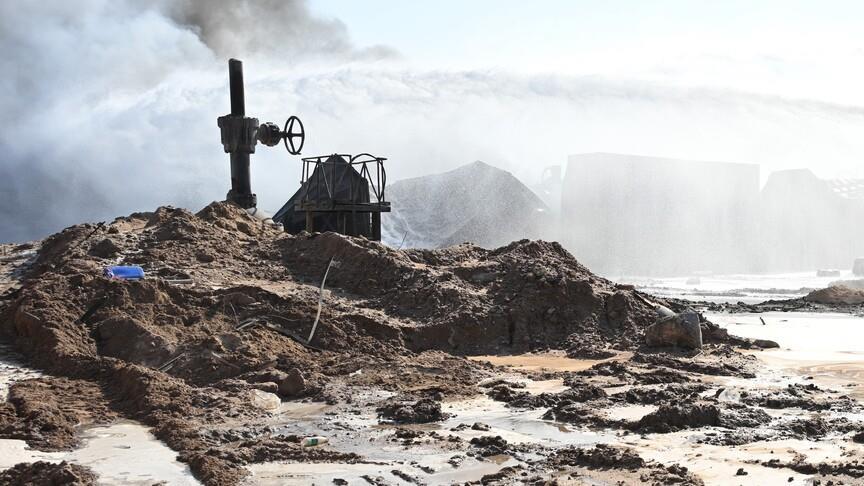
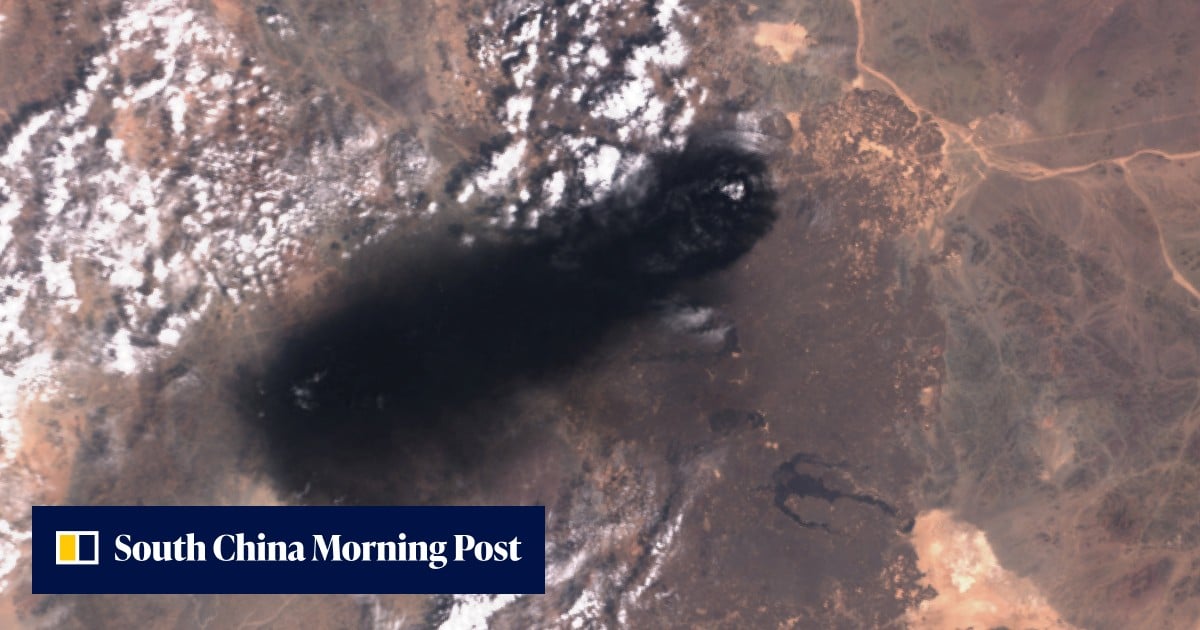
According to reports from the official Saudi Press Agency, specialized emergency and engineering units were deployed to evaluate physical structural integrity across affected pumping facilities shortly after the morning barrage. Analysis of thermal sensor telemetry and satellite imagery published by Copernicus Sentinel Data revealed visible fire and extensive smoke plumes southeast of Medina. Satellite evaluation reviewed by CNN and defense analysts indicated scorching across at least one major pumping station and a blaze at a second facility, alongside automated emergency flare ignitions designed to bleed off volatile hydrocarbons safely[3].
Both Riyadh and Baghdad quickly confirmed that the unmanned aircraft had traversed international airspace from Iraqi territory. The foreign ministry in Riyadh said the strikes came from Iraq, while Baghdad launched an immediate domestic inquiry. The office of Iraqi Prime Minister Ali al-Zaidi confirmed the trajectory had originated within the southern province of Maysan, which borders Iran, and moved swiftly to remove the regional military operations commander from his post. Reuters reported that Iraqi security forces also shuttered the Shalamcheh border crossing with Iran while launching search operations to identify the launch teams.
State-owned producer Saudi Aramco has not yet published an exact technical timeline for restarting crude throughput. Operating assessments gathered by energy intelligence firm Argus Media noted that while damage isolated to pumping installations can often be remediated faster than extensive pipeline pipe rupture, the system cannot safely restore pressurized operations until automated control networks and local integrity diagnostics are fully verified.
Geopolitical Fallback Under Direct Pressure
The 745-mile (1,200-kilometer) East-West pipeline, frequently called Petroline, connects the central stabilization facilities at Abqaiq near the Persian Gulf to marine tanker terminals at Yanbu on the western coastline. Built originally with a nameplate capacity approaching seven million barrels per day, the conduit was designed specifically to insulate Saudi Arabia against any foreign interdiction of Gulf transit[2].
| Strategic Corridor Feature | Operational Specification | Current Wartime Status |
|---|---|---|
| Total Pipeline Span | 1,200 km (745 miles) Abqaiq to Yanbu | Flows halted pending safety reviews |
| Design Export Capacity | Up to 7 million barrels per day | Suspended; operating at 4 to 5 million bpd prior to strike |
| Downstream Re-export Route | Yanbu to SUMED pipeline (Egypt) | Vulnerable to Red Sea maritime bottlenecks |
| Alternative Maritime Exit | Strait of Hormuz tanker passage | Depressed to roughly 30 percent of historic throughput |
As the Financial Times documented, the conduit functioned as the cornerstone of global crude continuity throughout months of heightened hostilities, shielding Saudi export deliveries from tanker harassment in the narrow waters between Oman and Iran. Maritime shipping registers reported that Yanbu crude was increasingly transferred via coastal shuttle runs to Ain Sokhna, where the SUMED pipeline transited supplies across Egypt to Mediterranean loading berths at Sidi Kerir. With Petroline now offline, that overland relief channel has broken down entirely[4].
Concurrent Red Sea Vulnerabilities
The shutdown coincides with acute maritime security deterioration along the Red Sea corridor. Even as drones disabled the inland pipeline, Yemen's Iran-aligned Houthi militants broadened coastal offensives around the southern chokepoint of Bab el-Mandeb. Western maritime monitors confirmed that Houthi detachments captured Perim Island and positions around the coastal port of Mokha, effectively granting the movement direct sightlines over commercial lanes entering the Gulf of Aden.
Statements from Houthi military spokesmen claimed ships flying the Saudi flag would face interdiction along the lower shelf of the Red Sea. That simultaneous threat closes the vice on Saudi export planning: moving crude eastward requires defying naval friction inside Hormuz, while moving it westward across Petroline terminates at a maritime basin facing drone, cruise missile, and land-based artillery exposure. The International Energy Agency previously calculated that Saudi crude production had slid to roughly six million barrels per day in August, marking multi-decade lows due to logistical export bottlenecks.
Market Shocks and Diplomatic Friction
Energy commodities reacted swiftly to the sudden loss of the Arabian bypass. Benchmark Brent crude settled above $104 a barrel, extending a weekly gain of more than eight percent as refiners factored in protracted transit complications. In the United States, diesel retail averages breached six dollars a gallon, heightening political scrutiny over domestic fuel inflation ahead of upcoming congressional elections. Global investment banks, including HSBC, have steadily revised upward their annual crude forecasts, noting that spare logistics capacity has eroded across the Middle East[14].
These attacks are not only aimed at the vital installations of the kingdom, but also on the global oil supply and its security, and thus pose a threat to the global economy.
Saudi Energy Ministry official, statement via SPA
Speaking to reporters during a diplomatic visit to Ireland, US President Donald Trump stated he believed Tehran was behind the strike operations, remarking that "they probably are" responsible given their regional proxy relationships. In Washington, however, officials have reportedly sought to temper direct intervention, declining repeated requests from Gulf allies for direct retaliatory aerial strikes against non-state combatants in western Yemen[8].
Diplomats are now balancing security retaliation against regional containment. The Gulf Cooperation Council issued a formal condemnation through Secretary-General Jasem Mohamed Albudaiwi, designating the Maysan drone launch a severe threat to international security and urging Baghdad to crack down decisively on regional militias. Riyadh affirmed it reserves the full legal right to protect domestic sovereignty, but the foreign ministry confirmed it will pause unilateral retaliatory actions against targets inside Iraq to allow the al-Zaidi administration sufficient room to investigate and neutralize cross-border militant factions.