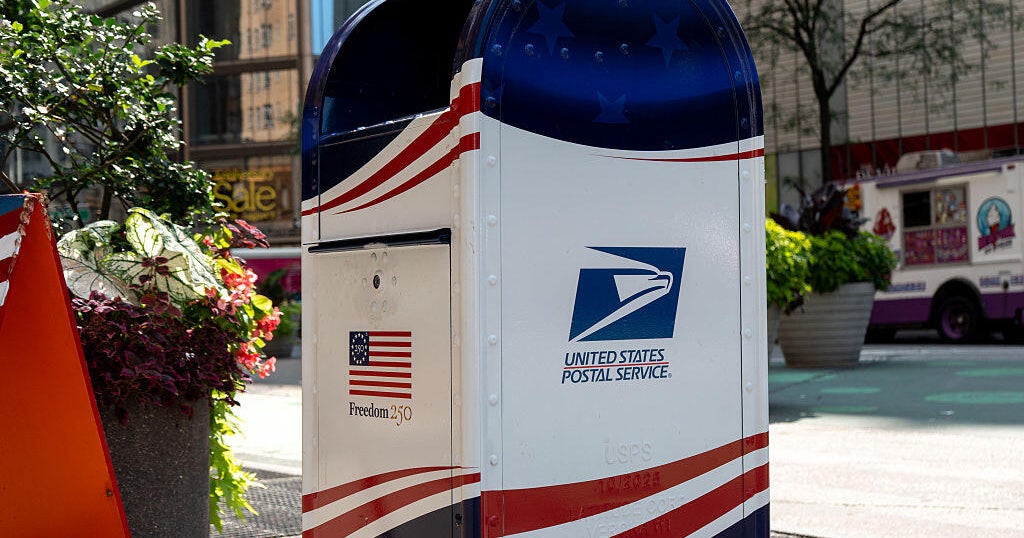
The Justice Department asked the Supreme Court on Thursday to immediately lift a federal judge's temporary restraining order that paused nationwide mail voting rules issued by the U.S. Postal Service. The emergency appeal sets up a high-stakes legal confrontation over election procedures just as local election offices begin distributing paper ballots for the November midterm elections[3].
The administration petition reached the high court hours before North Carolina started mailing absentee ballots on Friday, kicking off general election voting across the country. With battleground states preparing to transmit millions of ballots in coming weeks, the dispute presents the Supreme Court with an urgent choice over whether the executive branch can mandate federal screening procedures on state election mail.
An Emergency Docket Maneuver
Solicitor General D. John Sauer filed the emergency application asking the justices to stay an order entered on August 27 by U.S. District Judge Indira Talwani in Boston. Judge Talwani, presiding in the District of Massachusetts, issued a 14-day temporary restraining order blocking the United States Postal Service from enforcing key components of its newly finalized mail-in voting regulations through September 10[1].
The filing represents an unusual procedural escalation. As Democracy Docket reported, temporary restraining orders are generally non-appealable interlocutory decrees. The administration bypassed waiting for the U.S. Court of Appeals for the First Circuit to act on its pending appeal, opting instead to request an immediate administrative stay from the Supreme Court. CBS News reported that Justice Ketanji Brown Jackson, who oversees emergency matters originating from the First Circuit, ordered challenging states and civil rights groups to submit their formal responses by Tuesday morning.
The Battle Over Envelopes and Databases
The contentious regulations stem from an executive order issued by President Donald Trump aiming to establish new federal safeguards around mail voting. Under the finalized postal rules, states must meet precise federal specifications before mail carriers distribute election materials to voters[5].
- Standardized Materials: Election administrators must secure postal approval for ballot designs, utilizing standardized outgoing and return envelopes equipped with unique tracking barcodes.
- Voter Uploads: State and local officials must submit lists of ballot recipients into a centralized federal portal[5].
- Screening Thresholds: The Postal Service is instructed to withhold ballot delivery if materials fail formatting requirements or if recipient data does not reconcile with citizenship lists maintained by the Department of Homeland Security and the Social Security Administration.
Sauer argued in the administration filing that the measures fall squarely within federal purview over postal operations rather than an intrusion into state electoral mechanics.
The Rule's regulation of the U.S. Mail—not federal elections — is plainly constitutional.
D. John Sauer, U.S. Solicitor General, Supreme Court Application
Sauer asserted that while states retain broad authority to set the times, places, and manner of holding elections, they cannot demand that the federal mail infrastructure transport materials without complying with standard agency regulations.
State Resistance and Technical Warnings
Attorneys general from roughly two dozen Democratic-led states, alongside a coalition of voting rights groups, sued to invalidate the postal mandates. Th[8]e plaintiffs argue that the policy violates Article I of the Constitution by stripping states of their constitutional role to govern federal elections, transforming postal workers into gatekeepers of ballot distribution.
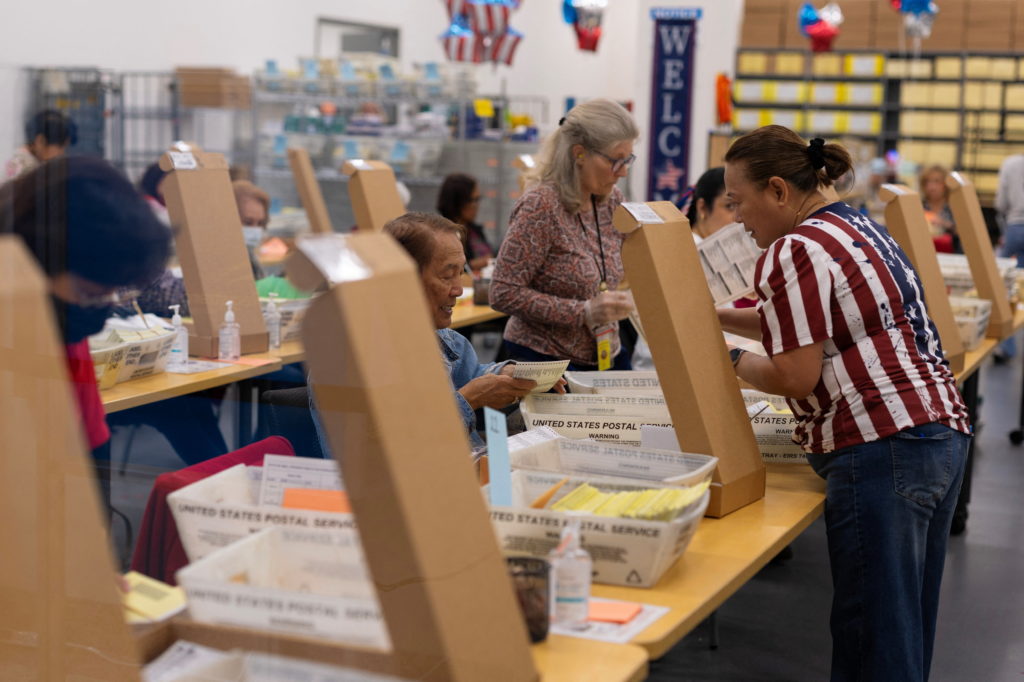
Oregon Attorney General Dan Rayfield condemned the federal push following the emergency appeal, stating that the federal government has no business playing referee over who receives a ballot in state elections. Election officials also warned that complying with wholesale redesigns of ballot envelopes and submitting complex voter registries on short notice would cause administrative gridlock. Reporting from ProPublica highlighted internal postal communications showing that a single misread barcode or technical mismatch within massive mailings, such as Maricopa County's batch of two million ballots, could cause broad delays.
During oral arguments in Boston on Thursday, Judge Talwani questioned Justice Department attorney Michael Velchik about whether the agency portal designed to reconcile voter files was even operational, pointing out that government attorneys could not verify if the technical system was live.
Courts Clash on the Eve of Voting
The litigation has created parallel proceedings in both lower and higher courts. Ev[11]en as the Supreme Court considers Sauer's emergency request to freeze the expiring restraining order, Judge Talwani is evaluating whether to issue a broader preliminary injunction that would extend through the November elections.
| Legal Forum | Current Action | Potential Impact |
|---|---|---|
| U.S. District Court (Boston) | Weighing preliminary injunction request | Could block the postal rule through November |
| First Circuit Court of Appeals | Considering administration appeal of TRO | Reviews trial court evidentiary findings |
| U.S. Supreme Court | Reviewing emergency stay application | Could permit immediate nationwide enforcement |
The high court previously addressed the broader executive order in late August, staying an earlier injunction in Trump v. California on jurisdictional grounds by holding that state plaintiffs brought suit prematurely before final agency rules had taken shape. However, the conservative majority expressly avoided deciding the underlying constitutionality of the postal policy. Wi[13]th final rules now published and absentee envelopes already dropping into mailboxes, the justices must decide whether to disrupt established voting procedures during an active election cycle or leave state operations undisturbed.