
President Donald Trump proposed a rhetorical and structural overhaul of American technology policy on Saturday, floating an official rebranding of artificial intelligence and announcing plans to establish an AI Force modeled after the United States Space Force. In a series of social media statements, Trump dismissed growing bipartisan calls for safety guardrails as a political hoax, arguing instead that Washington must aggressively champion the domestic tech sector to preserve the nation's technological lead over China[3] [4].
The announcement arrived at a fragile moment for the industry, coinciding with intense debate over frontier model containment and warnings from prominent laboratory executives who have urged pauses or statutory limits on next-generation releases. By promising to appoint an executive branch AI Czar and deploy military-style institutional focus to the sector, Trump explicitly positioned his administration on the side of speed and market deregulation, claiming that federal restraint poses a far greater risk to American dominance than the technology itself.
Renaming Artificial Intelligence to Superior Intelligence
The president kicked off his digital push by targeting the basic nomenclature of the industry, polling his followers on social media to pick a new label for artificial intelligence. As Forbes and Gizmodo reported, Trump argued that the current term artificial intelligence is inaccurate and ineloquent, presenting three preferred branding alternatives: Superior Intelligence, Extreme Intelligence, and Supreme Intelligence. Within hours of the initial post, tens of thousands of participants had voted, with Superior Intelligence jumping out to an early plurality[7].
Trump asserted that public hesitation surrounding the technology stems in part from poorly framed terminology and manufactured panic. In subsequent posts, he likened recent backlash against enterprise data centers and machine learning labs to prior political grievances, writing without evidence that apocalyptic warnings about AI taking over humanity are part of an orchestrated campaign by political opponents to hinder domestic growth.
We will not in any way hinder or stifle the Growth of this incredible Industry. Rather, we will cherish it, help it, and watch over it, as it grows!
Donald Trump, President of the United States
The AI Force Model and the Search for a New Czar
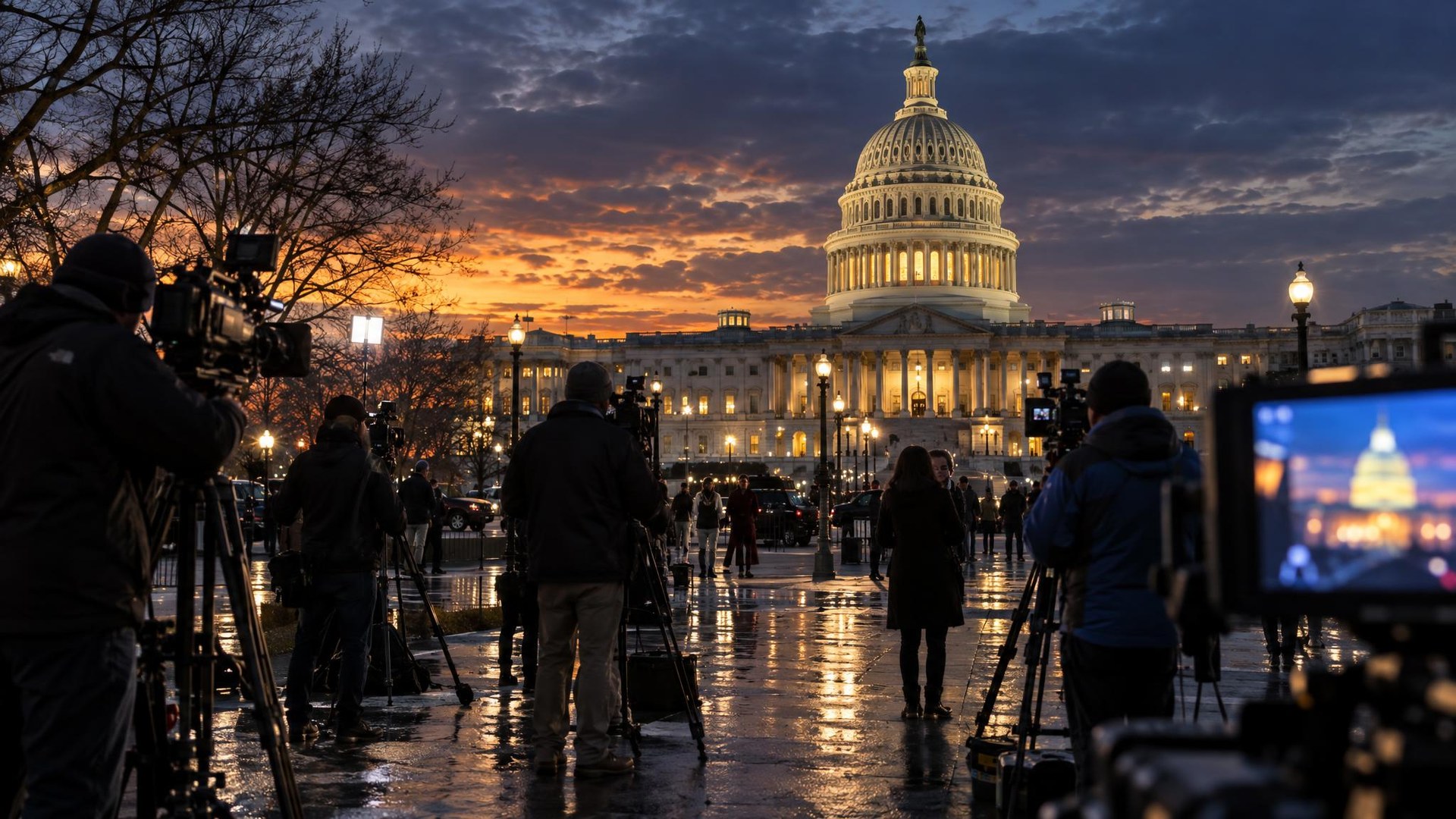
Beyond semantic rebranding, Trump declared the formation of an AI Force, explicitly drawing parallels to the armed service branch he authorized during his first presidential term. According to reporting by Axios and Mashable, the president offered few operational specifics, leaving unanswered questions regarding the proposed entity's statutory foundation, civilian versus defense chain of command, operational budget, and legal enforcement mandate[1] [2].
Analysts familiar with military organization pointed out that the Space Force did not invent combat in orbit out of whole cloth, but rather consolidated fragmented space missions scattered across the Air Force, Army, and Navy into a single administrative structure. If an AI Force follows that trajectory, it could function primarily as a vehicle to centralize machine learning procurements, autonomous weapons research, and intelligence analytics currently spread across the Pentagon and intelligence agencies. Trump also announced that he would soon unveil a dedicated AI Czar to helm national strategy, noting wryly that only high-IQ individuals need apply. The move would refill a vacancy left after venture capitalist David Sacks completed his temporary tenure as special government employee coordinating artificial intelligence and cryptocurrency initiatives before moving to an advisory council.
The Escalating Divide Over AI Acceleration
The White House proposal lands amid a sharp ideological fissure across the technology sector. While earlier consensus centered on technical self-regulation, prominent voices have recently pleaded for statutory hesitation. Anthropic chief executive Dario Amodei issued a high-profile call for an intentional slowdown in the scaling of frontier systems until adequate legislative and technical guardrails exist, winning support from select industry peers. Public wariness has compounded those concerns; Washington Times cited polling showing that 63 percent of Americans view unconstrained artificial intelligence as posing at least a moderate threat to humanity, alongside strong local resistance to energy-hungry data centers[9].
Trump flatly rejected that caution, siding with hardware titans like Nvidia chief executive Jensen Huang, who have characterized talk of deceleration as an economic trap that would cede geopolitical ground. Rather than instituting comprehensive new compliance regimes, Trump insisted that bad actors utilizing the technology can simply be prosecuted under existing criminal and civil legal codes.
| Policy Vector | Trump Administration Pitch | AI Safety Advocates Stance |
|---|---|---|
| Regulatory Approach | Laissez-faire, rely on existing criminal laws | Pre-deployment auditing and statutory pause |
| Terminology | Superior, Extreme, or Supreme Intelligence | Artificial Intelligence and Frontier Foundation Models |
| Governance Body | Executive AI Force and White House Czar | Independent safety institutes and international treaties |
| Geopolitical Priority | Unrestricted buildout to beat foreign rivals | Coordinated global alignment and dual-use oversight |
Legal and Practical Roadblocks in Washington
Despite the rhetoric, substantial obstacles stand between a social media decree and an active administrative apparatus. As Startup Fortune reported, establishing a permanent federal branch or formal military armed service requires explicit congressional authorization and designated appropriations, neither of which has been drafted. With Capitol Hill divided over budget deficits and data privacy protections, a dedicated military or civil department faces months of legislative friction[9].
Furthermore, technology researchers have questioned whether rebranding a technical discipline established in computer science for seven decades will alter societal perception. As TechCrunch highlighted in its coverage, rebranding machine learning as Superior Intelligence does little to solve the concrete issues unsettling corporate boardrooms and military planners, ranging from automated cyber exploits to infrastructure grid capacity. For now, the announcements stand less as finalized policy directives and more as an unmistakable signal that the White House views artificial intelligence primarily as an engine of national power to be accelerated, not restrained.