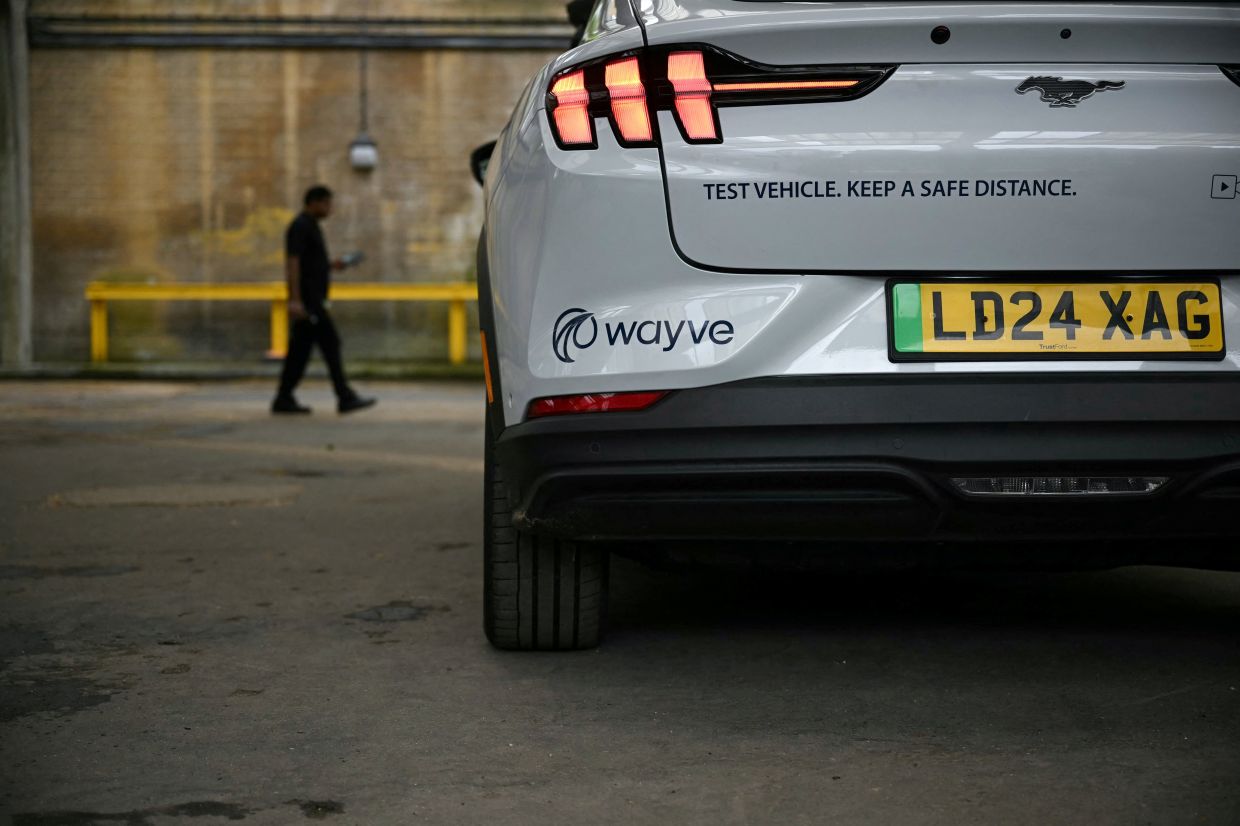
Public robotaxis have arrived on the streets of London, marking the first time paying passengers can hail an autonomous ride in the United Kingdom. In a joint rollout, ride-hailing giant Uber and London-based autonomous driving startup Wayve debuted a commercial service across the capital, beating out Alphabet-owned competitor Waymo to claim the milestone[1].
The service launched on Thursday with an initial fleet of all-electric Ford Mustang Mach-E SUVs equipped with Wayve's AI Driver system. While the commercial availability marks a major technological leap for London transit, European caution remains front and center: every vehicle currently carries a trained, licensed safety driver behind the wheel who can take control if unexpected obstacles emerge[1] [5].
Stepping Out Ahead of Waymo and Baidu
The London launch represents an operational victory for Uber and Wayve, who have pushed aggressively to outpace American and Chinese rivals on European ground. Waymo has been preparing to expand its autonomous operations into London this year, while Chinese tech giant Baidu has partnered with Lyft to target a UK passenger rollout. By launching this week, Uber and Wayve have claimed first-mover status in one of the most lucrative and complex mobility markets in the world.
According to reports from Agence France-Presse, London has become only the second European city to introduce a commercial robotaxi service to the public, following Zagreb, Croatia, where Croatian mobility venture Verne operates robotaxis using autonomous software from Pony.ai. In a statement to AFP, Wendy Lee, head of product at Uber, stressed that the companies intend to scale cautiously across the metropolitan area[1].
It's going to be a phased deployment, so we're going to start off small.
Wendy Lee, head of product at Uber, to AFP
Lee confirmed that vehicle numbers will be in the order of dozens to start, with AFP noting that Wayve and Uber currently hold safety authorization for 15 supervised vehicles under local regulations.
How the Service Works for London Riders
Uber announced that standard app users requesting UberX, Uber Electric, or Uber Comfort can be matched randomly with a Wayve-equipped vehicle at no additional charge. Upfront fares remain identical to standard trips. To smooth passenger adoption, riders are notified before the vehicle arrives and are given the choice to opt out and switch to a standard human-driven ride. More than 140,000 Londoners had registered their interest in advance through the Uber app to boost their matching priority, according to figures released by Uber[2].
Inside the cabin, passengers interact with custom dashboard screens available in 64 languages, allowing them to confirm trip details, view the sensor pathing, and unlock vehicle doors via their phone. The vehicles can travel across greater London, though airport routes are excluded during this inaugural phase.
| Feature | Uber and Wayve Deployment Details |
|---|---|
| Vehicle Model | All-electric Ford Mustang Mach-E |
| Supervision Level | Human safety operator present in driver's seat |
| Licensing Body | Transport for London (Private Hire Vehicle license) |
| Pricing Structure | Standard UberX and Uber Comfort fares with no surcharge |
| Expansion Target | Nissan Leaf rollout planned for Tokyo later this year |
The "Embodied AI" Bet Against HD Maps
Wayve has distinguished its technology by eschewing the traditional autonomous vehicle playbook. While pioneers such as Waymo rely heavily on centimeter-accurate high-definition maps and rigid rule-based motion planning, Wayve utilizes what it calls an "AV2.0" foundation model approach. The startup trains deep neural networks on massive multi-modal real-world driving data, allowing its vehicle perception to interpret dynamic environments on the fly rather than matching pre-mapped coordinates[5].
London offers the ultimate proving ground for that model. The capital's street plan dates back centuries, defined by twisting residential roads, dense bus networks, heavy bicycle traffic, and narrow curbs. Unlike in the United States, pedestrian jaywalking is entirely legal in the United Kingdom, forcing autonomous perception stacks to cope with unpredictable crossing behaviors at all times.
Wayve and Uber have made it clear that London is only the opening chapter of their platform agreement. CNET reported that the two partners plan to bring self-driving passenger rides aboard the Nissan Leaf to Tokyo later this year[5].
The Road to Removing the Human Driver
The primary barrier separating this launch from true autonomy remains the human sitting behind the steering wheel. During an AFP press demonstration through Westminster, a safety operator had to intervene manually at a complex junction near Big Ben. Kaity Fischer, head of business development at Wayve, told AFP that such edge cases are precisely why operators remain on board to guarantee passenger and public safety.
Regulators at Transport for London (TfL) have granted Private Hire Vehicle licenses to Wayve's vehicles, satisfying the existing "triple-lock" legal standard requiring operator, vehicle, and driver credentials. Operating without any human driver, however, requires a completely different mechanism: the automated passenger services permit administered through the Driver and Vehicle Standards Agency (DVSA)[12].
Reporting by The Guardian reveals that progress on fully driverless approvals has faced significant administrative slowdowns, with TfL yet to publish final operating guidance. Christina Calderato, TfL's director of strategy, informed the London Assembly that the authority would not be ready to accept fully driverless applications for some time. While Waymo has indicated it hopes to test driverless vehicles in London before the end of the year subject to approvals, Sarfraz Maredia, Uber's head of autonomous mobility, conceded to reporters that the timeline for removing safety operators remains entirely uncertain.