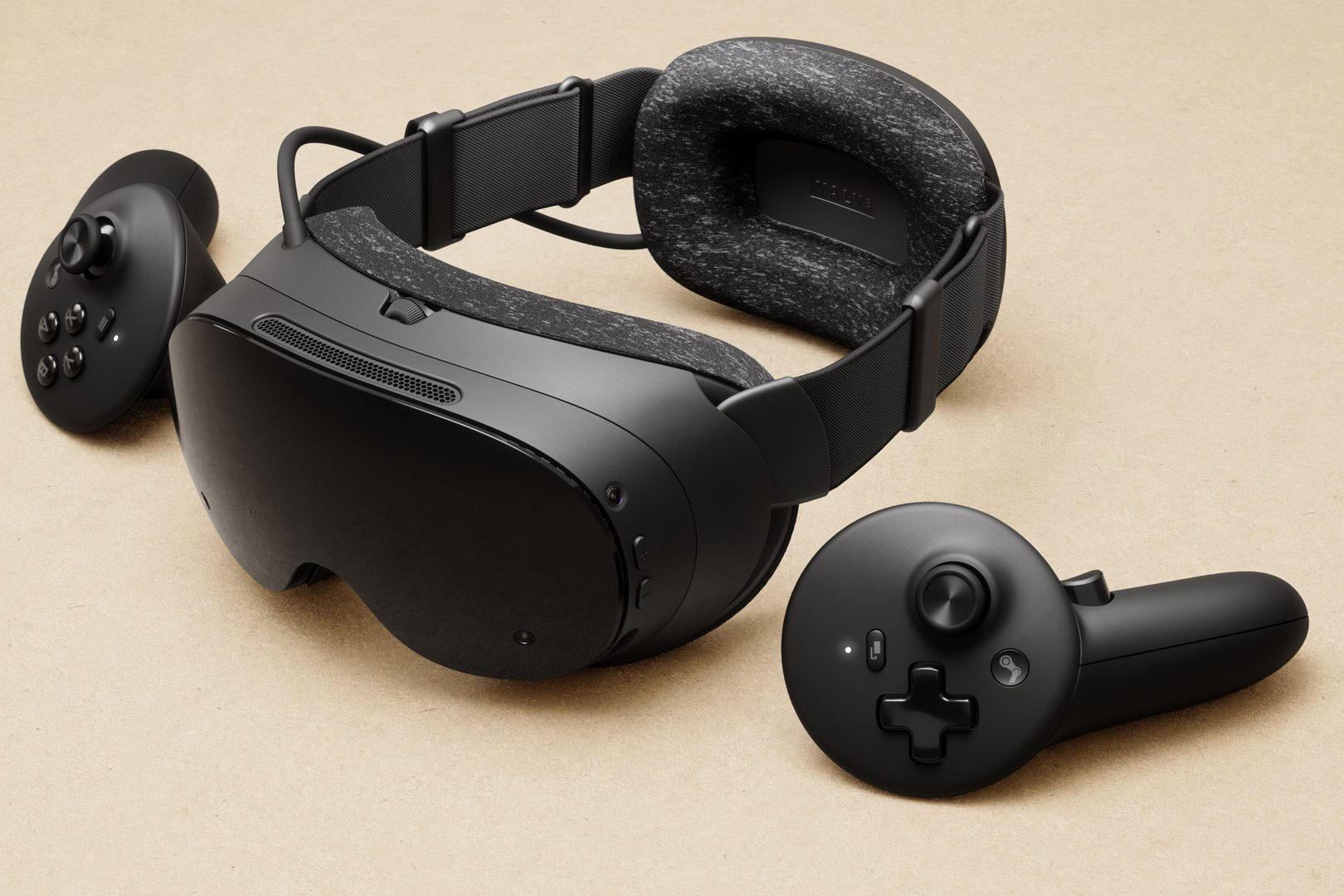
Valve officially detailed the pricing and availability of its next hardware venture, the Steam Frame, opening reservations for a standalone virtual reality headset designed to blend native gaming with low-latency PC streaming. The device marks the company's first direct successor to the tethered Valve Index, shifting away from external tracking base stations toward a self-contained, inside-out design[3] [4].
The device enters a gaming landscape increasingly pinched by supply chain and memory costs. Rather than chasing mainstream budget pricing, Valve has targeted premium performance, aiming to tempt enthusiast PC players away from competing platforms while providing a pathway to untethered virtual reality[3] [7].
Pricing, Specifications, and the Hardware Lottery
Valve confirmed that the Steam Frame will start at $1,059 for a 256GB base model and climb to $1,299 for an expanded 1TB storage edition. Both packages arrive with two newly designed motion controllers, an eye spacer for glasses wearers, and a dedicated 6GHz wireless USB dongle engineered to establish an immediate, point-to-point connection with a host computer. To soften the financial blow, Valve includes a rebuild of its premier title, Half-Life: Alyx, adapted to execute locally on the headset hardware.
Distribution mirrors the company's prior rollout playbook. Road to VR and PC Gamer reported that Valve opened a 72-hour registration lottery running through September 17. Instead of a traditional first-come, first-served queue, purchasers will be selected via randomization. According to Valve's announcement, the first batch of purchase confirmation emails will roll out on September 18, with hardware shipments initiating immediately afterward[1].
| Configuration | Base Storage | Processor / Memory | US Retail Price |
|---|---|---|---|
| Steam Frame Standard | 256GB UFS (Expandable via microSD) | Snapdragon 8 Gen 3 / 16GB LPDDR5X | $1,059 |
| Steam Frame High-Capacity | 1TB UFS (Expandable via microSD) | Snapdragon 8 Gen 3 / 16GB LPDDR5X | $1,299 |
Valve has opted not to bundle a standard wall charger in the box. Instead, customers must supply their own 45W USB-C adapter or buy Valve's official power supply unit for $29. The company also introduced optional accessories, including a $59 Ergonomic Accessories Kit with controller hand straps and an extended light blocker, alongside a $49 replacement cushion kit.
Under the Hood: Standalone Power and Wireless Fidelity
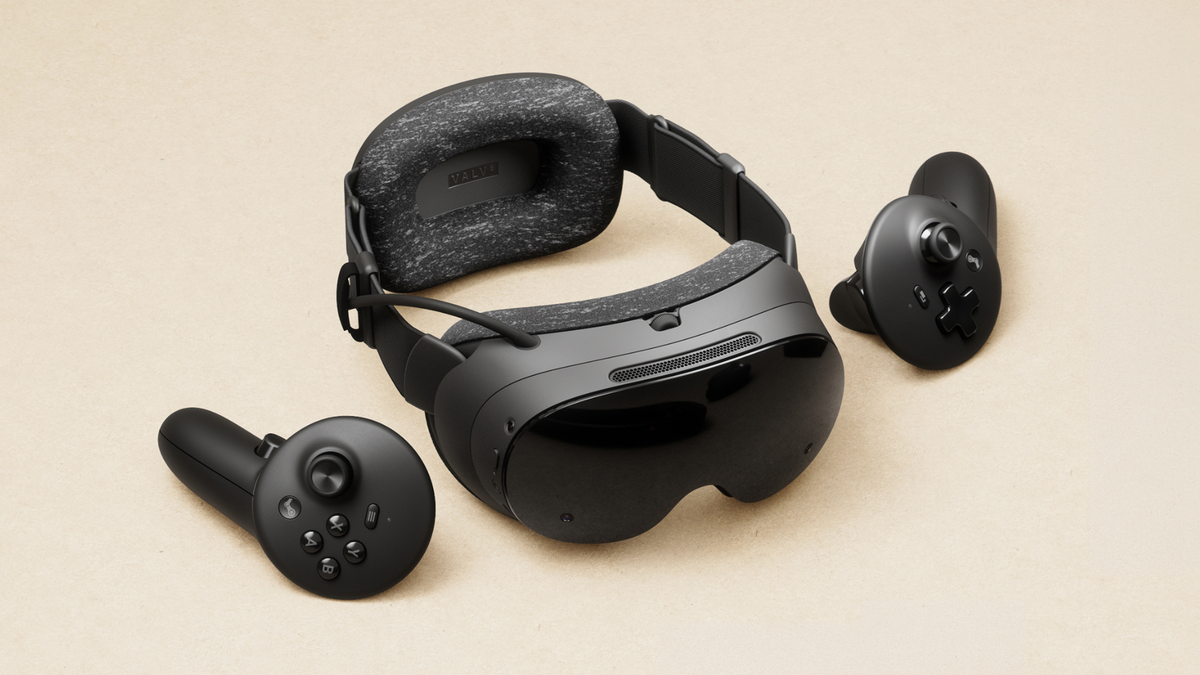
Internally, the Steam Frame represents a departure from traditional tethered PCVR headsets. It runs a modified ARM64 architecture build of SteamOS powered by the Qualcomm Snapdragon 8 Gen 3 system-on-chip coupled with 16GB of unified LPDDR5X memory. Analysis from Club386 highlighted that this configuration doubles the system memory found on competing devices like Meta's Quest 3, giving the Frame sufficient overhead to run native desktop software translations and compute-heavy VR titles on device[7].
Visual output relies on dual LCD panels delivering 2,160 by 2,160 pixels per eye, offering variable refresh rates spanning from 72Hz up to an experimental 144Hz ceiling. Built-in eye tracking drives foveated streaming, a technique where the headset concentrates rendering bandwidth exclusively where the wearer is gazing.
Early reviews emphasize comfort as a major design achievement. Tom's Hardware noted that the headset weighs approximately 440 grams with its headstrap, roughly half the mass of the 809-gram Valve Index. The redistribution of weight, achieved by mounting the 21.6Wh battery at the rear of the harness, prevents the front-heavy pressure common in standalone headsets[9] [13].

Enthusiast Appeal vs. Market Realities
Early critical impressions illustrate a sharp divide between technical execution and broad accessibility. In a hands-on review, PC Gamer characterized the Steam Frame as an exemplary enthusiast headset hampered by macroeconomic constraints.
The memory crisis has done a number on the Steam Frame, as it did the Steam Machine. The Steam Frame isn't a cheap way into virtual reality for the masses. It has to be viewed as an enthusiast offering; or, at the very least, you have to care a bit about VR to purchase one.
PC Gamer
Hardware reporting across outlets including IGN and TechPowerUp noted that Valve originally hoped to position the product near or below the Index's former price threshold. However, escalating prices across high-bandwidth memory and processors pushed retail targets upward.
Reviewers also noted key operational limitations. Gizmodo observed that while the Frame features external cameras for environmental awareness, passthrough remains strictly monochromatic, lacking the full-color spatial mixed-reality features found on rival products. Standalone performance also cannot mirror dedicated desktop graphics cards, meaning high-end simulations remain reliant on streaming over the included wireless adapter. Even so, reviewers widely agreed that for players focused strictly on tether-free PC gaming, the wireless connection provides exceptionally low latency[7] [12].