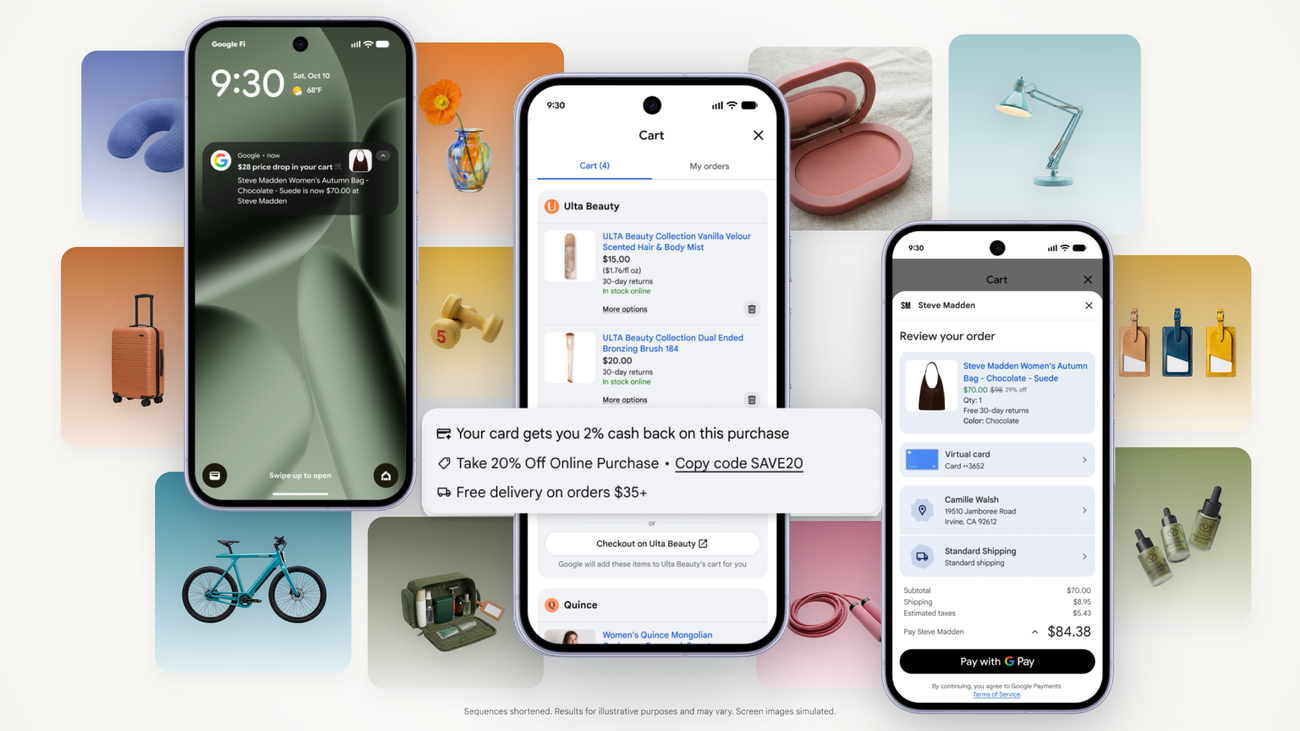
Google launched Universal Cart across the United States on Thursday, embedding a centralized digital shopping cart directly into Google Search and the Gemini app just as the holiday retail season gathers momentum. The new feature allows shoppers to save items discovered across disparate surfaces, organize products from competing merchants in a single basket, monitor real-time price reductions, and complete purchases using Google Pay[2] [3].
First previewed during the company's annual I/O developer conference in May, the tool marks an assertive push by Alphabet to transform its search surfaces into an end-to-end commerce destination. Rather than routing shoppers out to dozens of browser tabs and merchant landing pages, Universal Cart consolidates product discovery and transaction rails directly inside generative conversational workflows and standard query results.
Consolidating Retail Catalogs Under One Digital Roof
According to a company announcement authored by Suresh Ganapathy, senior director of product management for consumer shopping at Google, the system relies on the more than 60 billion continually refreshed product listings indexed inside Google's Shopping Graph. Shoppers can clip products encountered across AI Mode in Search or while conversing with the Gemini mobile app, building an inventory that persists across sessions[1].
As reported by The Next Web, early participating merchants include major retail chains and consumer brands such as Walmart, Target, Nike, Sephora, Ulta Beauty, and Wayfair, alongside independent merchants hosted on Shopify. For items added from eligible partners, shoppers can check out natively through Google Pay. For non-participating retailers, the system instead transfers the saved basket directly to the merchant's checkout page to complete payment.
Google emphasizes that even during native checkouts, participating stores remain the merchant of record, meaning they handle order fulfillment, returns, and primary post-sale customer support. Customers can track status updates such as shipping milestones through a dedicated tab saved to Google Wallet[7].
Automated Discounts and Wallet Optimization
Universal Cart operates as more than a passive bookmarking tray, incorporating automated background monitoring to assist shoppers in hunting for bargains. 9to5Google reports that the software continuously scans for price drops, stock replenishment, and unadvertised promotional codes that can be applied at checkout.
The system also leans heavily into user data stored in Google Wallet. By parsing the perks and cashback incentives tied to a consumer's linked payment cards, Universal Cart recommends specific credit cards to maximize points or rebate earnings before a purchase is finalized.
The underlying infrastructure is driven by open interoperability standards. The company built the experience on top of the Universal Commerce Protocol, developed in collaboration with Shopify, while drawing on its Agent Payments Protocol to enable artificial intelligence agents to communicate with established payment gateways under user-defined spending limits[2].

Retailer Autonomy and Advertising Repercussions
While the feature eliminates friction for holiday consumers, it introduces fresh friction for independent digital retailers. Analysis from MediaPost highlights that native in-app checkouts fundamentally alter online cart abandonment dynamics. When a consumer abandons a basket within Universal Cart, that intent data sits within Google's proprietary ecosystem rather than triggering traditional abandoned-cart email sequences and first-party remarketing pixels on a merchant's website[6].
Industry observers note that native checkout threatens classic last-click affiliate attribution. When Google surfaces discounts directly in the native cart interface, the final referral click to coupon aggregators or review blogs never takes place, severing the commission pipeline that sustains many web publishers.
International Rollout Skips Europe Amid DMA Friction
Google confirmed that Universal Cart is initially restricted to the United States, with official roadmaps indicating future expansions planned for Canada, Australia, and the United Kingdom. Notably absent from the expansion slate is the European Union[2].
As The Next Web noted in its launch coverage, the European omission follows intense regulatory friction under the European Commission's Digital Markets Act. Brussels hit Alphabet with an 890 million euro DMA fine in July, citing unfair self-preferencing across its shopping, hotel, and local search services. Fearing escalating daily turnover penalties and ongoing litigation from regional price-comparison engines, Google has chosen to withhold its automated multi-merchant checkout tools from European markets entirely for the foreseeable future.
Video